


Nature of accounts (Normal Balance): Why are assets debited and liabilities credited?

Nature of accounts (Normal Balance): Why are assets debited and liabilities credited?
Accounts are the “Containers” that store all of a company’s financial movements. To record a transaction correctly, you must first understand the classification of accounts (Assets, Liabilities, etc.) and the nature of accounts (is it naturally Debit or Credit?). This understanding is the secret key to building accurate journal entries and balanced financial statements—Digital Salla.
- Precise definition of an “Account” and the Chart of Accounts.
- Classification into 5 main groups: Assets, Liabilities, Equity, Revenue, and Expenses.
- The Golden Rule of Debit and Credit for each group.
- The T-Account: How it works and why we use it (SVG).
- Distinction between “Real” (Permanent) and “Nominal” (Temporary) accounts.
- Interactive tool to check the nature of any account instantly.
1) What is an Account? (The Record-Keeper)
An account is a detailed record of the increases and decreases in a specific financial item. All accounts together form the General Ledger, and the organized list of these accounts is called the Chart of Accounts (COA).
2) The 5 Main Classifications of Accounts
Professional accounting groups every possible business transaction into 5 main “buckets”:
- Assets: Resources owned (Cash, Equipment, Inventory).
- Liabilities: Obligations owed to others (Loans, Accounts Payable).
- Equity: Owners’ residual share (Capital, Retained Earnings).
- Revenue: Income from selling goods or services.
- Expenses: Costs incurred to generate revenue (Rent, Salaries).
3) Nature of Accounts: Why Debit vs Credit?
Every account has a “Home” or normal nature. This nature determines whether the account increases with a Debit (Left side) or a Credit (Right side).

Chart of Accounts Setup Service
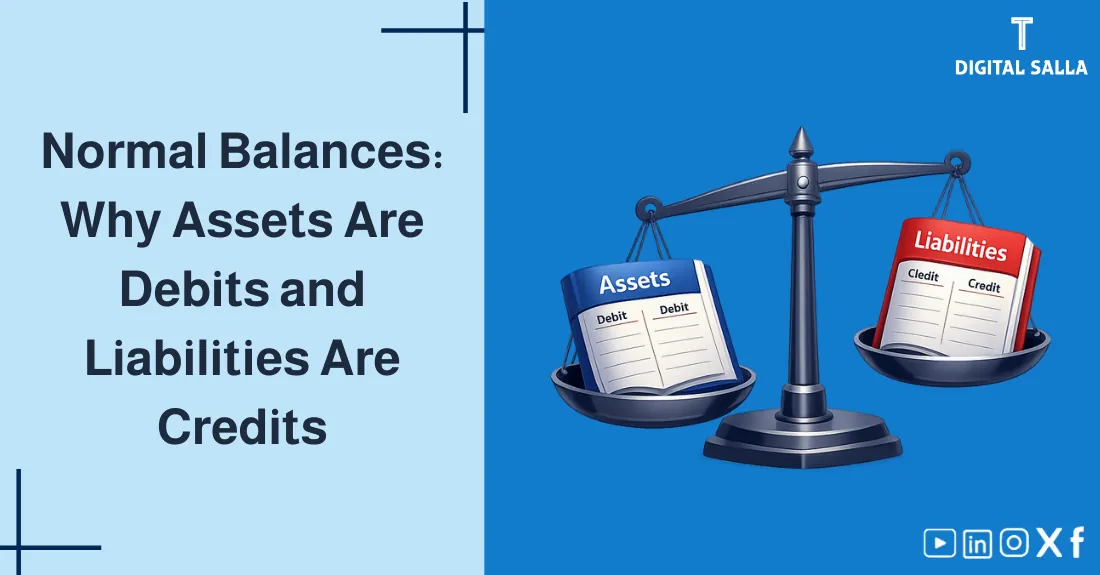
- Debit Nature Accounts: Assets and Expenses.
- Credit Nature Accounts: Liabilities, Equity, and Revenue.
4) The T-Account Structure (The Visual Tool)
Accountants use the T-Account to visualize the balance and movements of a specific account.
5) The Golden Rules of Accounting
How the balance changes based on the transaction type:
| Account Type | Normal Nature | To Increase (+): | To Decrease (-): |
|---|---|---|---|
| Assets | Debit | Debit | Credit |
| Expenses | Debit | Debit | Credit |
| Liabilities | Credit | Credit | Debit |
| Equity | Credit | Credit | Debit |
| Revenue | Credit | Credit | Debit |
6) Real vs. Nominal Accounts: The Life Cycle
- Real (Permanent) Accounts: Balance Sheet accounts (Assets, Liabilities, Equity). Their balances carry over from year to year.
- Nominal (Temporary) Accounts: Income Statement accounts (Revenue, Expenses). Their balances are reset to zero at the end of each year to start a new period.
7) Interactive Tool: Account Nature Checker
8) Analysis Checklist: Identifying Account Nature
Steps to analyze any account:
- Classify: Does it belong to Assets, Liabilities, Equity, Revenue, or Expenses?
- Define Nature: Based on the classification, is its home Debit or Credit?
- Identify Change: Does the current transaction increase or decrease the balance?
- Apply Rule: Use the Golden Rule to determine if it should be Debited or Credited in the journal entry.
9) Frequently Asked Questions
Does ‘Debit’ always mean an increase?
No. It only means an increase for Assets and Expenses. For Liabilities, Equity, and Revenue, a Debit represents a decrease.
What is a ‘Contra Account’?
It is an account that reduces the balance of another account. Its nature is the opposite of its companion (e.g., Accumulated Depreciation is a Credit nature account that reduces an Asset).
Why do we reset Nominal accounts every year?
To measure the performance (Profit or Loss) of that specific year separately from other years.
10) Conclusion & Summary
The classification of accounts and understanding their nature is the “DNA” of accounting. By mastering the rules of Debit and Credit, you move from just memorizing entries to understanding the logic behind every financial movement in the company—Digital Salla. Always remember: the accounting equation must balance, and every T-account is a story of a resource’s movement.