

Internal control and the COSO framework: The company’s safety valve

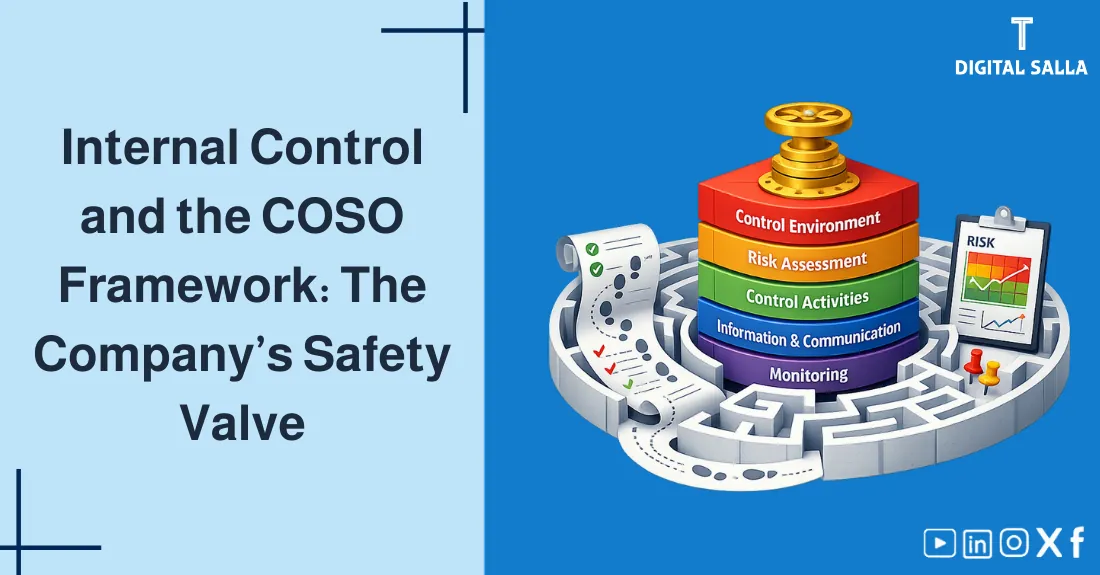
Internal Control and the COSO Framework: The Company’s Safety Valve
Internal Control: A professional guide on the Internal Control system and why the COSO Framework is the ultimate safety valve for protecting assets, reducing errors, and preventing fraud—Digital Salla.
- Fundamental definition: What is Internal Control and its primary objectives?
- In-depth view of the COSO Framework: The 5 core components of control.
- The 3 lines of defense: How to structure oversight across the organization.
- Examples of Control Activities: Segregation of duties, physical counts, and approvals.
- Operational checklist to evaluate the strength of your entity’s control system.
1) The Concept of Internal Control
Internal Control is a process designed to help an organization achieve its objectives in three categories: (1) Operational Effectiveness, (2) Reliable Financial Reporting, and (3) Compliance with Laws and Regulations.
2) The COSO Framework (The Gold Standard)
The Committee of Sponsoring Organizations (COSO) framework is the most widely recognized model globally for designing and evaluating internal control systems. It views control not as an “Event,” but as a continuous process integrated into management.
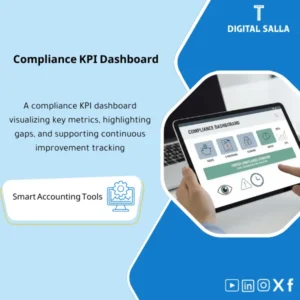
Compliance KPI Dashboard - Excel Dashboard
3) The 5 Components of Internal Control
According to COSO, a strong system must have these five integrated parts:
| Component | Definition | Key Requirement |
|---|---|---|
| Control Environment | The “Tone at the Top.” Ethics and integrity of management. | Formal Code of Conduct and clear organizational structure. |
| Risk Assessment | Identifying events that could prevent reaching objectives. | Dynamic analysis of internal and external risks. |
| Control Activities | Policies and procedures that ensure management directives are carried out. | Segregation of duties and physical safeguards. |
| Info & Communication | How data is captured and shared across the company. | Accurate reporting and effective whistleblowing channels. |
| Monitoring Activities | Regularly evaluating the system to ensure it’s still working. | Internal audit and periodic management reviews. |
4) The Control Environment Path (Visual Logic)
Why “Risk Assessment” is the engine that drives “Control Activities”?
5) Examples of Vital Control Activities
- Segregation of Duties: Ensuring the person who Approves a payment is not the same person who Executes the bank transfer.
- Physical Safeguards: Access cards for warehouses, locked cash boxes, and security cameras.
- Authorizations: Spending limits for different levels of management (e.g., Department head approves up to $5,000).
- Independent Reconciliations: Monthly bank reconciliations and inventory counts performed by someone other than the record-keeper.
6) The Three Lines of Defense Model
To structure accountability, modern organizations use this model:
- 1st Line: Operational Management. (They own the risk and perform the day-to-day controls).
- 2nd Line: Risk & Compliance. (They set the standards and monitor the 1st line).
- 3rd Line: Internal Audit. (They provide independent assurance to the board).
7) Operational Controls & Readiness Checklist
To ensure your Internal Control system is robust:
Internal Control Quality Gate
- Is there a clear Conflict of Interest policy signed by all employees?
- Are GL accounts reconciled within the first 10 days of every month?
- Is “User Access” to the accounting system reviewed quarterly (Removing old staff)?
- Do we perform Surprise inventory counts at least twice a year?
- Are major variances from the Budget formally explained in a management report?
8) Common Errors and How to Prevent Them
- Lack of Documentation: Having a “Control” (like verbal approval) that leaves no audit trail. Solution: Use digital approval workflows.
- Ignoring the Tone at the Top: Management bypassing controls “Just this once.” This destroys the culture of compliance.
- Metric Overload: Monitoring 500 minor controls and missing the 5 material risks. Focus on Materiality.
- Static System: Keeping the same controls for a growing company. What worked at $1M revenue will fail at $50M.
9) Frequently Asked Questions
What is the main purpose of COSO?
The COSO framework provides a structured methodology to design, implement, and evaluate internal control systems that minimize risks and ensure objective achievement.
What is Segregation of Duties (SoD)?
It is the control principle of dividing responsibilities for a transaction between multiple people to prevent errors and fraud. Typically: Authorization, Recording, and Custody should be separate.
Is Internal Control only for large corporations?
No. Even a small shop needs internal control (e.g., the owner checking the cash register). The scale changes, but the Principle remains the same.
10) Conclusion
Internal Control is not a “Financial Brake” that slows the company down; it is the Safety Belt that allows it to drive faster toward its goals. By applying the COSO Framework and focusing on Risk Assessment and Control Activities, you protect the entity’s assets, ensure the integrity of your data, and build a culture of accountability that fosters sustainable growth and trust with investors and regulators alike.
Action Step Now (30 minutes)
- Identify your company’s most valuable asset (Cash, Inventory, or Data).
- List the 3 people who have access to it.
- Check: Does any one of them have the power to both Control the asset and Record its movement alone? If yes, you have an SoD Risk to fix today.