



Intercompany Pricing & Controls – Word & Excel Files
111.44 $
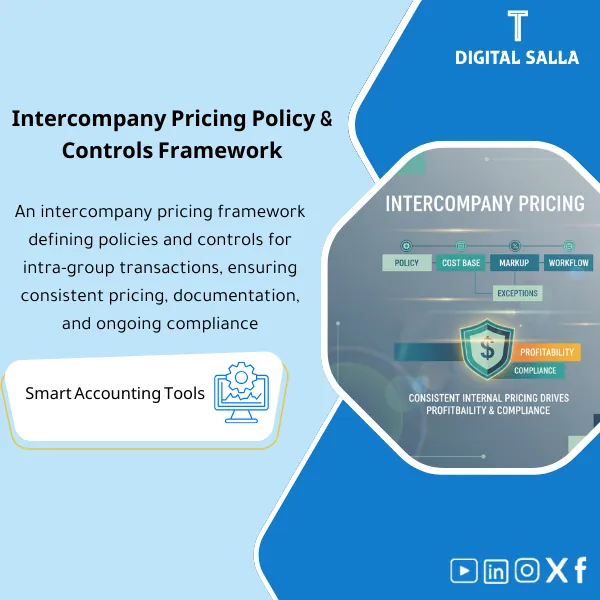
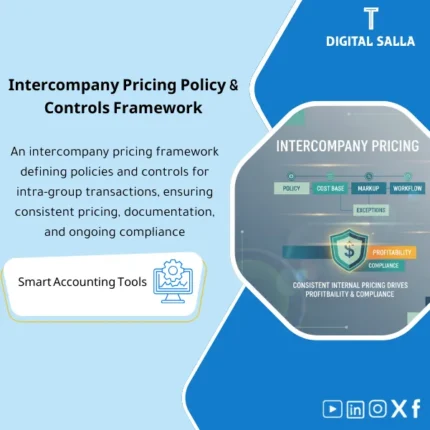
Intercompany Pricing Policy: Defines cost base, markup, and pricing method for intercompany transactions, with change controls and exception reporting. Delivers an enforceable internal pricing policy supporting profitability and tax/TP compliance.
Intercompany Pricing + Controls
Internal Pricing Policy + Cost Base Rules + Mark-up Matrix + Calculator + Approvals + Month-End Controls + Review Pack
Value Proposition: The Intercompany Pricing pack establishes the logic of pricing within the group with evidence: Policy → Cost Base → Mark-up Matrix → Calculator → Approvals → Month-End Controls so that any charge-out can be traced from source cost to pricing percentage to intercompany JE/Invoice and then tie-outs before closing, instead of recurring discrepancies that appear during Eliminations or when examining pricing.
In 20 Seconds: What Will You Get?
- Intercompany Pricing Policy: Scope of transactions, pricing methodology, supporting requirements, and approval pathway.
- Cost Base Rules: Definition of what is included/excluded in the cost base and how exclusions are documented.
- Mark-up / Margin Matrix: Rates/margins by type of service/transaction with approval dates.
- Cost Plus Calculator: Calculation of charge-out from cost pools + allocation keys + mark-up.
- Approvals + Change Log: Who approved? What changed? When? And why?
- Month-End Controls Checklist: Tie-out checks before closing (AR/AP + symmetry + timing).
- Review Pack: A monthly file that consolidates inputs/calculations/approvals/tie-outs and exceptions.
CTA related to deliverables: Receive Policy + Calculator + Controls to operate internal pricing with outputs that can be reviewed and linked to closing.
Suitable For
- Group Finance / Controller looking to standardize service pricing within the group and establish an approval pathway.
- Consolidation / Intercompany Lead aiming to reduce intercompany discrepancies before Eliminations.
- Tax/TP Interface needing operational evidence (calculators + approvals) to support pricing documentation.
Not Suitable For
- A company that does not have actual intercompany transactions/services (no periodic charge-out).
- Anyone looking for “ready-made benchmarking” or final margin determination without cost pool data and allocation keys and operational application.
Without the Pack / With the Pack (Quick Comparison)
| Item | Without Intercompany Pricing Controls | With Intercompany Pricing Controls |
|---|---|---|
| Pricing Methodology | Markup varies by person/period | Policy + Matrix + Change log (approved version) |
| Cost Base | Mixed costs and unclear exclusions | Cost base rules + mapping + documented exclusions |
| Month-End | Intercompany AR/AP discrepancies appear at closing | Controls + tie-outs + exceptions before closing |
Before Use: 5 Symptoms of Intercompany Pricing Issues
- Inconsistent intercompany margins for the same service across different entities without explanation/approval.
- Lack of a clear definition of Cost base (what is included? what is excluded?) leading to inflation/deflation in charge-out.
- Charges recorded without an account file or approval, raising questions during review/TP.
- Intercompany AR/AP discrepancies accumulate and burden the consolidation team during Eliminations.
- Significant Year-End adjustments to fix pricing instead of a disciplined monthly operation.
Intercompany Pricing: Implementation Method (3 Steps Without Gaps)
Step 1: Preparation and Reporting Collection
- Identify types of intercompany transactions: management services, IT, HR, logistics, sales/purchases…
- Define Cost pools and allocation keys (Headcount/Revenue/Usage…) and link them to cost centers.
- Identify GL accounts used for intercompany (AR/AP/Revenue/Expense) and coding requirements.
Step 2: Policy + Matrix + Calculator + Approvals
- Draft Pricing policy: methodology for each type of transaction + supporting requirements + exceptions.
- Establish Cost base rules and Mark-up matrix and operate Cost plus calculator.
- Update Approvals log and Change log for any changes in methodology/rates.
Step 3: Month-End Controls + Tie-outs + Review Pack
- Issue intercompany invoices/entries according to policy and calculator outputs.
- Execute Controls checklist: AR/AP match + symmetry between revenue/expense + timing differences.
- Compile Review pack monthly with exceptions before closing.
Pack Components (Clear Inventory)
-
Intercompany Pricing Policy
- Practical Purpose: Establish methodology for each type of transaction + supporting requirements + approval pathway.
- When to Use: During establishment + annual review or when services/structure change.
- Output Document: A concise policy document for reference when application differs.
-
Cost Base Rules
- Practical Purpose: Define cost pools and exclusions (non-chargeable) and link them to their source in GL.
- When to Use: Before operation and any adjustments in cost structure.
- Output Document: A table of rules + mapping for GL accounts/cost centers.
-
Mark-up / Margin Matrix
- Practical Purpose: Standardize pricing rates by type of service/transaction and reduce monthly discretion.
- When to Use: During monthly operation + upon any change with documentation.
- Output Document: A matrix with approval dates + decision reference/attachment.
-
Cost Plus Calculator
- Practical Purpose: Calculate charge-out from specified inputs (cost pools + allocation keys + mark-up).
- When to Use: Monthly or quarterly based on internal billing cycle.
- Output Document: Calculation sheets + output totals ready for posting/billing.
-
Approvals Log + Change Log
- Practical Purpose: Document who approved the methodology/rates and any changes made, when, and why.
- When to Use: With each cycle or when modifying policy/matrix.
- Output Document: A review and approval log supporting governance and TP requests.
-
Month-End Controls Checklist
- Practical Purpose: Checks before closing: AR/AP match, revenue/expense symmetry, timing/currency differences.
- When to Use: Every Month-End before closing accounts.
- Output Document: A completed checklist + tie-outs + explanations of exceptions.
-
Intercompany Review Pack
- Practical Purpose: Consolidate inputs/calculations/approvals/tie-outs into one file for each period.
- When to Use: Monthly + annual consolidation for Year-End/Consolidation file.
- Output Document: An indexed pack that can be included in the Closing Pack or Consolidation file.
CTA related to deliverables: Policy + matrix + calculator + Month-End checks to operate intercompany pricing with outputs that can be reviewed.
What Should Be Included in the Delivery?
- 01 – Policy: Internal pricing policy document (scope/methodology/approvals/exceptions).
- 02 – Mark-up Matrix: Rates/margins by type of transaction + approval date + change log.
- 03 – Cost Pools & Mapping: Definition of cost pools + mapping for GL accounts/cost centers + exclusion rules.
- 04 – Allocation Keys: Distribution keys + data source + update frequency.
- 05 – Calculator: Inputs + outputs + summary totals for each entity/beneficiary.
- 06 – Posting/Billing Support: Tables ready for billing or daily entries (Charge schedules/JE support).
- 07 – Approvals & Evidence: Approvals log + attachments (decision/email approval/minutes) per your system.
- 08 – Month-End Controls: Checklist + AR/AP tie-out + symmetry checks + explanations of discrepancies.
- 09 – Exceptions Log: Open intercompany discrepancies and closure plan.
- 10 – Review Pack Index: An index linking all outputs to the source and attachment.
After Implementation (Two Key Points)
- Operational Outcome for the Team: Charge-out operation becomes a regular fixed process (inputs → calculator → approvals → posting → controls) instead of significant year-end adjustments.
- Control/Audit Outcome (Evidence & Traceability): Any intercompany amount can be traced back to cost base, allocation key, and approved rate, with tie-outs before closing reducing elimination discrepancies.
FAQ — Questions Before Purchase
Is it suitable for Cost plus intercompany method?
Yes. It includes cost base rules + cost plus calculator + mark-up matrix for recurring charge-out operations.
Does it cover intercompany services like IT/HR/Management fees?
Yes. Each type of service is defined within the policy, then cost pools and allocation keys and their respective mark-up are specified.
Does it support multiple currencies?
Currency/exchange rate columns can be added within the calculator and review pack. Management of translation differences depends on your group policy and system.
Does it include benchmarking for margins?
No by default. An approved internal scope can be included, but external benchmarking requires a separate study.
What is the minimum data required to get started?
Types of intercompany transactions + GL accounts + cost pools + allocation keys + previous month/quarter examples if available.
Does it help reduce elimination discrepancies in consolidation?
Yes, through controls (AR/AP match + symmetry + timing) and the presence of a review pack clarifying reasons for discrepancies before posting.
Can it be linked with transfer pricing documentation (Master/Local file)?
Yes. Outputs (calculator + approvals + policy) are used as supporting evidence within TP documentation.
Does it require changes to COA or Dimensions?
Not necessarily, but having accounts/dimensions that distinguish intercompany transactions facilitates tie-out and reduces exceptions.
Ready to Establish Intercompany Pricing with Policy and Controls?
You will receive: Policy + Cost base rules + Mark-up matrix + Calculator + Approvals + Month-End controls + Review pack to operate and deliver intercompany pricing.
| المسمّى الوظيفي | |
|---|---|
| Duration | |
| المستوى | |
| التحديثات | |
| القطاع | |
| متوافق مع | |
| الصيغة |
Related products


DOA Matrix – Excel Template


Sales Controls Template – Excel Template
Sales Control Template is an effective Excel tool to manage and monitor sales invoices and revenue contracts with automated workflows, analytical reports, and charts to help you understand sales performance. Highly flexible and editable to fit your needs—strengthening sales controls and improving performance.
Reviews
Clear filtersThere are no reviews yet.