


DuPont Analysis: How to Break Down Return on Equity to Discover the Secret of Profit?

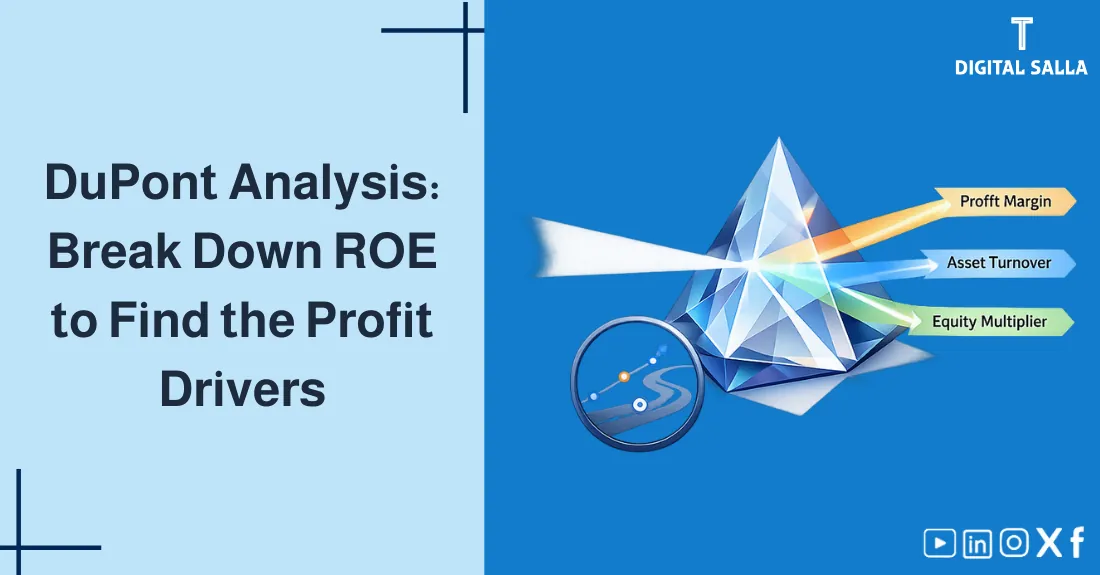
DuPont Analysis: Deconstructing Return on Equity to Understand Profit
DuPont Analysis is the most powerful method to turn Return on Equity (ROE) from a “ratio” into a “story”: Did ROE improve due to Profit Margin? Or due to Asset Turnover? Or as a result of Financial Leverage? This article explains the DuPont Identity, providing an example and a simplified calculator to help you deconstruct ROE and make clear improvement decisions.
- Understanding the DuPont Identity formula and how it breaks ROE into its drivers.
- Practical interpretation of each component: Profit Margin, Asset Turnover, Financial Leverage.
- The Three-Step and Five-Step (Extended) DuPont versions and when to use each.
- A step-by-step numerical example + Ready-to-use DuPont Calculator.
- A Checklist for making improvement decisions without “window dressing” via numbers.
1) What is DuPont Analysis? And why is it important?
DuPont Analysis is an analytical framework that explains Return on Equity (ROE) by breaking it down into manageable factors. Instead of simply saying “ROE went up/down”, the CEO will ask you: Why?—and this is where the DuPont Identity shines.
2) DuPont Identity Formula (Deconstructing ROE)
The most common three-step formula for deconstructing ROE is:
| Component | Formula | What does it measure? |
|---|---|---|
| Net Profit Margin | Net Income ÷ Sales | How much the company earns from every dollar of sales |
| Asset Turnover | Sales ÷ Average Total Assets | Efficiency of converting assets into sales |
| Financial Leverage (Equity Multiplier) | Average Assets ÷ Average Equity | Extent of company reliance on funding compared to equity |
ROE = (Net Income ÷ Sales) × (Sales ÷ Average Assets) × (Average Assets ÷ Average Equity)
3) Interpreting the Three Drivers: Margin/Turnover/Leverage
3.1 Net Profit Margin
- Increases by improving pricing, reducing cost of sales, controlling expenses, and reducing waste and returns.
- May improve “superficially” due to a non-recurring item—so watch out for earnings quality.
3.2 Asset Turnover
- Increases by increasing sales without equivalent increase in assets, or by improving utilization of current assets.
- Influenced by inventory and receivables management, as well as fixed asset efficiency (utilization rates, downtime, maintenance).
3.3 Financial Leverage (Equity Multiplier)
- An increase means a larger proportion of assets is funded by debt/liabilities compared to equity.
- Can boost ROE even with constant margin… but may increase liquidity and solvency risks if not managed wisely.
4) DuPont Diagram (SVG): ROE into 3 Drivers
The following diagram illustrates the decomposition of ROE according to the DuPont Identity:
5) Extended DuPont (Five-Step)
Sometimes you want deeper detail to separate tax impact and interest impact from operations. Here you use the five-step version:
| Component | Formula | What does it explain? |
|---|---|---|
| Tax Burden | Net Income ÷ EBT | Impact of taxes on final profit |
| Interest Burden | EBT ÷ EBIT | Impact of financing costs (Interest) on profit |
| Operating Margin | EBIT ÷ Sales | Operating profitability before financing and taxes |
| Asset Turnover | Sales ÷ Average Assets | Efficiency of assets in generating sales |
| Equity Multiplier | Average Assets ÷ Average Equity | Impact of financial leverage and funding structure |
6) How to diagnose the problem and decide on improvement?
The best way to use DuPont Analysis is comparing DuPont components across: (1) Time periods (YoY / QoQ), (2) Competitors, and (3) Internal targets.

FS Mapping Model - Excel File
| Observation | Possible Explanation | Practical Improvement Decision |
|---|---|---|
| Low Margin | Cost pressure/Discounts/Expenses | Improve pricing, control cost of sales, review expenses, reduce waste and returns |
| Low Turnover | Underutilized assets/Stagnant inventory/Slow receivables | Improve asset utilization, manage inventory and receivables, raise fixed asset productivity |
| Very High Leverage | ROE driven by debt (Higher risk) | Review funding structure, test interest tolerance, adjust liquidity and liabilities |
7) Step-by-Step Numerical Example
Let’s assume the following data (simplified values):
| Item | Value |
|---|---|
| Net Income | 4,500 |
| Sales | 50,000 |
| Average Assets | 60,000 |
| Average Equity | 30,000 |
- Net Profit Margin = 4,500 ÷ 50,000 = 9%
- Asset Turnover = 50,000 ÷ 60,000 = 0.83
- Financial Leverage = 60,000 ÷ 30,000 = 2.00
- ROE = 9% × 0.83 × 2.00 ≈ 15%
8) DuPont Analysis Calculator
Enter your numbers to get the three DuPont Identity drivers and ROE reading. It is preferred to use averages (Beginning + Ending ÷ 2) for Assets and Equity.
9) Improving Asset Turnover: Practical Operational Tools
Often the “Missing Driver” in DuPont is Asset Turnover: Many assets used less efficiently than they should be (underutilized equipment, downtimes, inaccurately recorded assets, random maintenance…). Improving turnover starts with Asset Verification and management/maintenance.
10) Limitations and Warnings when using DuPont
- Accounting Policies: Capitalization/Expensing, Inventory Valuation, Depreciation—may change margins and assets, thus drivers.
- Non-recurring Items: May temporarily inflate Net Income, distorting “Margin”.
- Seasonality: Averages of Assets/Equity are more important than end-of-period snapshot.
- Industry and Business Model: Retail might operate with lower margin and higher turnover, while capital-intensive industries might reflect the opposite.
- Leverage Risk: Boosting ROE with debt without strong repayment capacity increases default probability upon shocks.
11) Frequently Asked Questions (FAQ)
What is DuPont Analysis?
It is a framework (DuPont Identity) that breaks down ROE into: Net Profit Margin, Asset Turnover, and Financial Leverage—to know the source of improvement/decline.
What is the basic DuPont formula?
ROE = (Net Income ÷ Sales) × (Sales ÷ Average Assets) × (Average Assets ÷ Average Equity).
Is a higher ROE always a good indicator?
Not always. It might rise due to increased Financial Leverage (higher debt). DuPont helps distinguish between operational improvement and “funded” improvement with higher risk.
Is it preferred to use Average Assets and Equity?
Yes, especially in growing or seasonal companies. Averages reduce the bias of relying on a single point-in-time value.
When do I use the Five-Step DuPont?
When you want to separate the impact of Interest and Taxes from Operations, or when there is significant change in cost of funding or tax burden.
12) Conclusion
DuPont Analysis is the best way to understand ROE decomposition into clear drivers: Profit Margin + Asset Turnover + Financial Leverage. When you know which driver caused the improvement or decline, the discussion shifts from “ratios” to “decisions”: Do we need to improve margin? Or raise asset efficiency? Or mitigate funding risks?