

Modern internal audit: Transition from ‘fault-finding’ to ‘risk-based auditing’

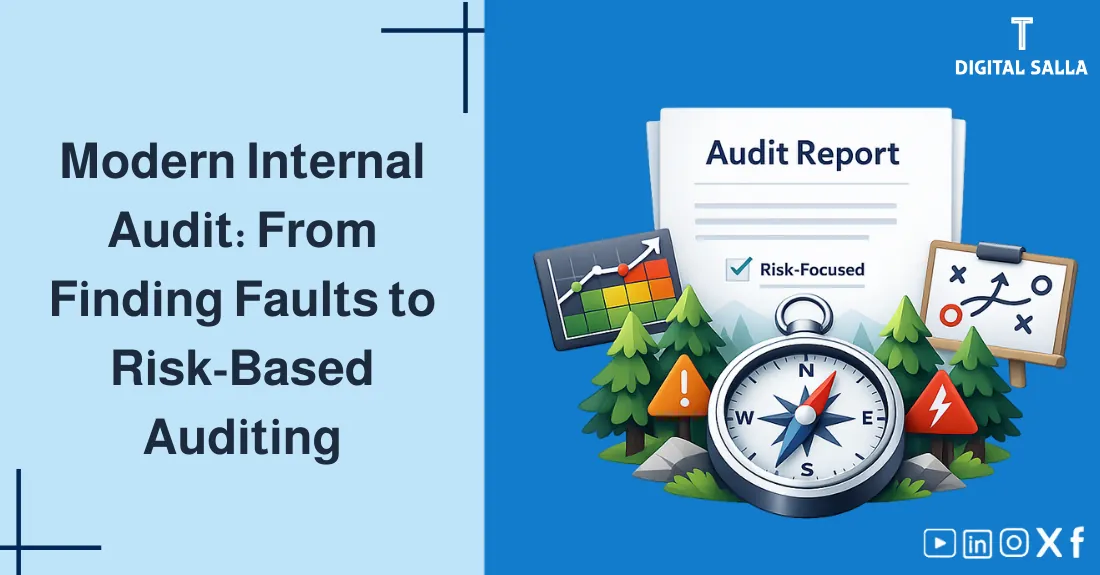
Modern Internal Audit: Moving from ‘Fault-Finding’ to ‘Risk-Based Auditing’
Modern Internal Audit: A practical guide to Risk-Based Auditing (RBA) according to IIA standards, explaining how the function shifts from simple inspection to adding strategic value—Digital Salla.
- Fundamental shift: Traditional vs. Modern Internal Audit.
- What is Risk-Based Auditing (RBA) and how to allocate audit resources.
- The “Consultative Approach”: Becoming an advisor to management.
- Auditing Institutional Culture and “Soft Controls.”
- Using Data Analytics and Continuous Auditing for real-time assurance.
- Checklist: Is your audit department truly adding strategic value?
1) The Fundamental Shift in Internal Audit
In the past, internal audit was seen as the “Financial Police”—checking for math errors and missing signatures. In the modern era, IA has evolved into a Strategic Advisor.
| Aspect | Traditional Audit | Modern (Risk-Based) Audit |
|---|---|---|
| Focus | Compliance and Vouching | Strategy and Risk Management |
| Objective | Finding past errors | Preventing future losses |
| Auditor Role | Police / Inspector | Internal Consultant / Partner |
| Output | List of missing papers | Business improvement insights |
2) Risk-Based Auditing (RBA) Methodology
Risk-Based Auditing ensures that audit efforts are focused on areas that could have the greatest impact on the company’s survival and growth.
- Audit Universe: A list of all possible auditable units (Departments, Systems, Processes).
- Risk Assessment: Scoring each unit based on complexity, dollar value, and historical issues.
- Annual Plan: Only the “High Risk” items are included in the immediate audit cycle.
3) The Audit Value Path (Visual Logic)
How modern auditing transforms from “Observation” to “Improvement”?
4) Assurance vs. Consulting Services
Modern standards allow IA to perform two distinct roles:
Cash Flow Statement Guide - PDF File
- Assurance Services: Providing an independent opinion on the effectiveness of controls (e.g., Auditing Payroll).
- Consulting Services: Ad-hoc advice or project support (e.g., helping design the control system for a New ERP implementation).
5) Auditing Soft Controls and Corporate Culture
Hard controls (Signatures/Passwords) are easy to audit. Modern IA also audits “Soft Controls”:
- The Tone at the Top: Do executives actually follow the ethics policy?
- Competence: Are employees adequately trained for their roles?
- Accountability: Are there consequences for bypassing rules?
6) Continuous Auditing and Data Analytics
Why wait for a year to audit when you can have Continuous Assurance?
Digital Audit Advantage
- 100% Testing: Analyzing every transaction instead of just a 5% sample.
- Real-time Alerts: System automatically flags a duplicate payment as it happens.
- Predictive Analytics: Spotting patterns that suggest fraud before it occurs.
7) Aligning with Institutional Strategy
To add real value, the audit plan must be linked to the KPI Dashboard of the CEO. If the company’s goal is “Fast Digital Growth,” the audit team must focus on Cybersecurity and IT Scalability, not just petty cash.
8) Operational Controls & Readiness Checklist
To ensure your Internal Audit is modern and effective:
Audit Value Quality Gate
- Does the Audit Committee approve the risk-based annual plan?
- Is at least 20% of the audit plan dedicated to Consulting/Improvement projects?
- Do audit reports focus on “Root Cause Analysis” rather than just symptoms?
- Is Data Analytics (Excel/Power BI/ACL) used in every audit engagement?
- Is there a formal “Follow-up” process to track recommendation implementation?
9) Common Errors and How to Prevent Them
- Stagnant Audit Plan: Auditing the same departments every year regardless of their risk level.
- Lack of Technical Acumen: Using old manual techniques for highly digital business processes.
- Weak Reporting: Using inflammatory language that creates an adversarial relationship with management.
- Measuring Success by findings: Thinking that more findings means a better auditor (True success is fewer Re-occurring findings).
10) Frequently Asked Questions
What is Risk-Based Auditing?
It is an approach that prioritizes audit activities based on the risks that are most likely to prevent an organization from achieving its strategic goals.
How can IA remain independent if they act as “Consultants”?
By ensuring they never make management decisions or perform operational duties. They provide advice, but management remains the owner of the process.
Can Internal Audit help in fraud prevention?
Yes, by identifying weak controls that create “Opportunities” (as defined in the Fraud Triangle) and suggesting preventative measures.
11) Conclusion
Transitioning to Modern Internal Audit is the hallmark of a mature organization. By moving away from “Fault-Finding” and embracing Risk-Based Auditing and Data Analytics, you transform the IA function into a vital strategic asset. This approach ensures that your entity is not just complying with the past, but is actively navigating risks to seize the future with confidence, efficiency, and integrity.
Action Step Now (30 minutes)
- Ask your internal audit team: “Which 3 risks are driving this month’s audit plan?”.
- Review the last audit report: Does it suggest a Business Improvement or just list a mistake?
- Check if your audit team has access to real-time data for Continuous Monitoring.