


Zero-Rated and Exempt Tax: Key Differences and Their Impact on Input Tax Credit
Difference Between Zero-Rated and Exempt Tax: When Are Supplies Subject to Zero Rate and When Are Goods Considered Exempt? How Does This Affect Input Tax Credit and Tax Refund, Especially in Exports—Digital Basket.
Accounting Treatment for VAT: Sales, Purchases, Returns, and Discounts Constraints (Constraints Guide)
VAT Constraints: A Guide to Sales, Purchases, Returns, and Discounts Constraints, with Examples of Sales Tax Entries, Purchase Tax Entries, How to Record Tax Payment, and Account Closure—Digital Basket.
VAT Return: Preparation, Review, and Error-Free Submission Steps
VAT Return: Steps to Prepare and Review the Return Form, How to Submit the Return on Time with Knowledge of Return Dates and Late Penalties, and a Checklist to Prevent Input and Output Errors—Digital Basket.
Tax Invoice: Mandatory Data to Avoid Penalties and Rejection of Tax Deduction
Tax Invoice: What are the mandatory data in invoice requirements? How to avoid penalties and rejection of tax deduction, with clarification on electronic invoices and simplified tax invoices and common errors—Digital Basket.
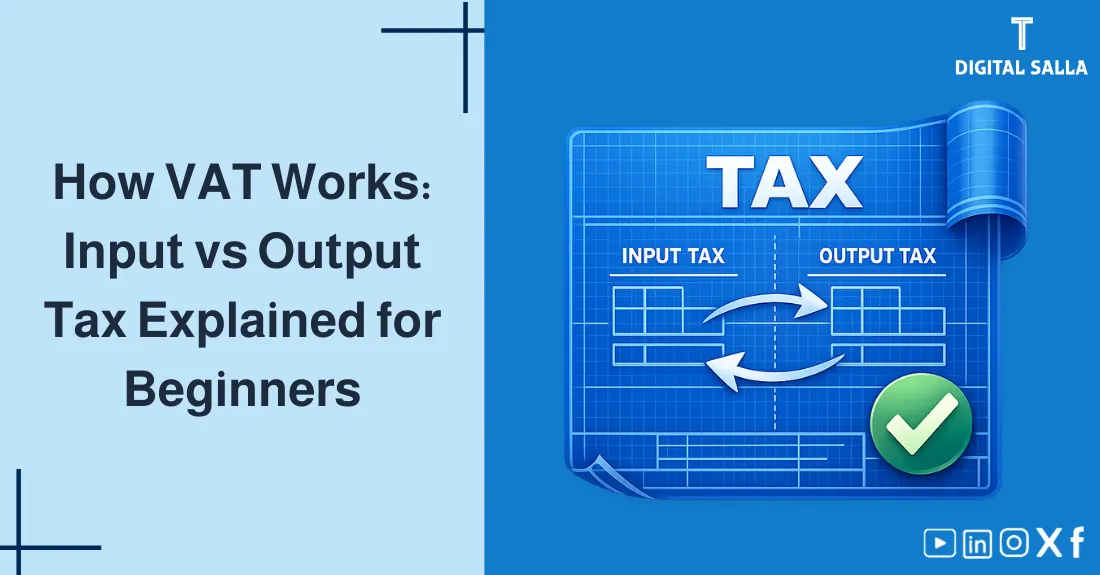
How does Value Added Tax work? The difference between input and output tax (Beginner’s Explanation)
Value Added Tax Explained for Beginners: The concept of value added, how to calculate the tax, the difference between input and output tax, when to start registration for the tax, and what documents are required—the digital basket.
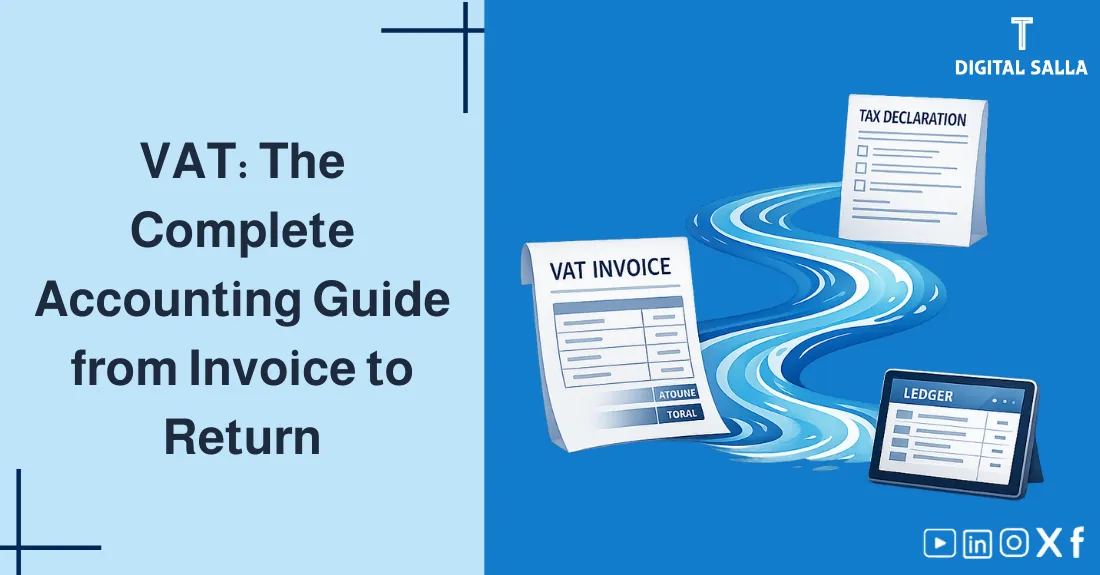
Value Added Tax (VAT): The Comprehensive Accounting Guide (From Invoice to Declaration)
Value Added Tax: The comprehensive accounting guide for VAT Accounting in Saudi Arabia, from invoice to entries, understanding input and output tax, and preparing data to submit a correct declaration without penalties—the digital basket.
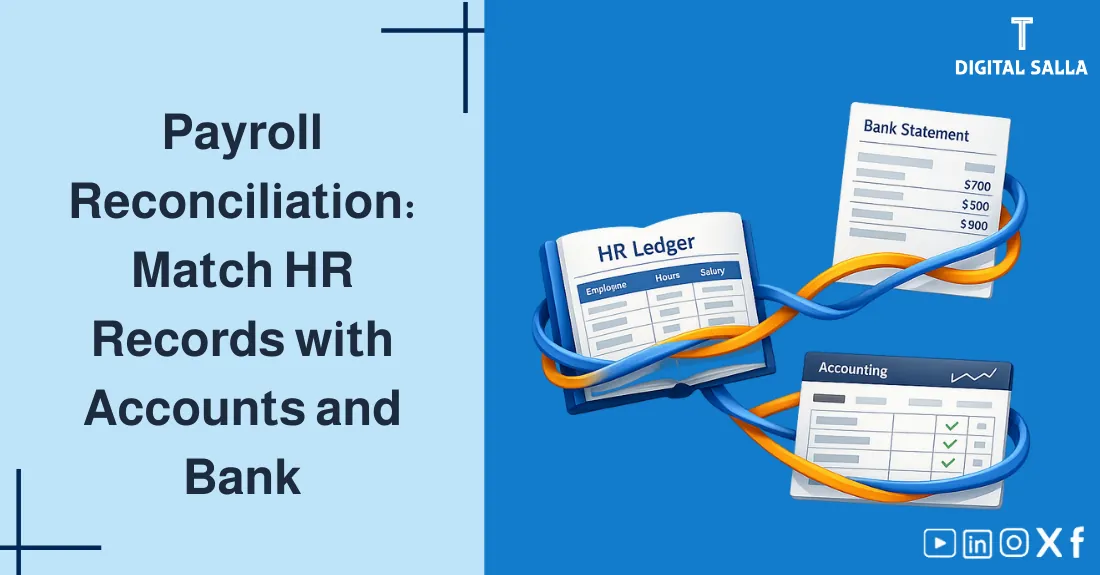
Payroll Reconciliation: How to match HR records with accounts and the bank?
Payroll Reconciliation: How to reconcile payrolls and review them by matching HR records with accounts and bank statements, and discover discrepancies before they turn into problems or claims—the digital basket.
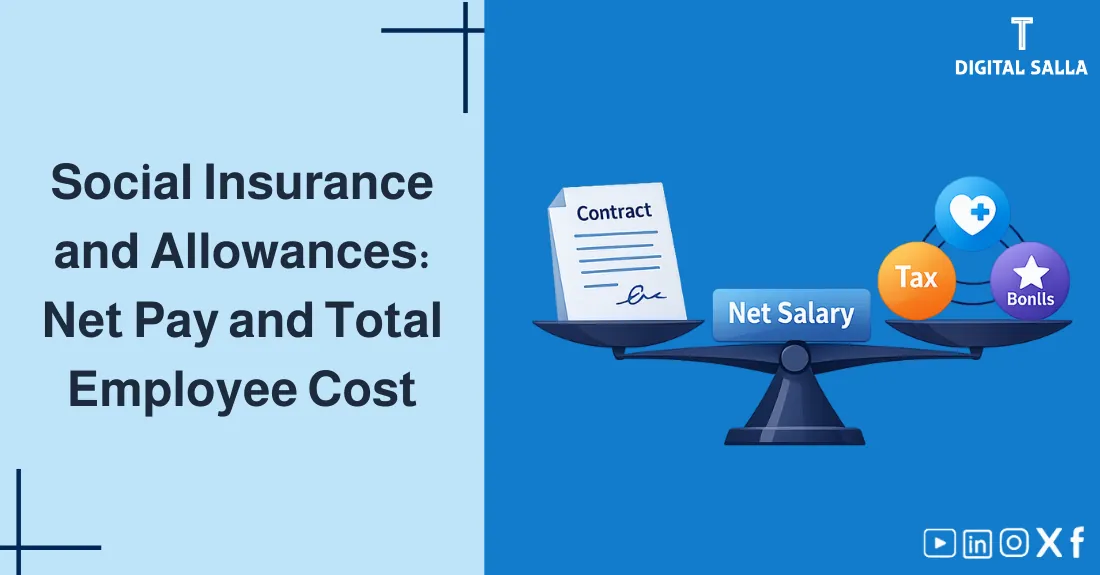
Social Insurance and Allowances: How to calculate the net salary and the employee’s cost to the company?
Social Insurance Calculation: How to calculate the company's share and the employee's share (GOSI) and record the insurance entry and deductions to reach the net salary and the employee's cost to the company accurately—the digital basket.
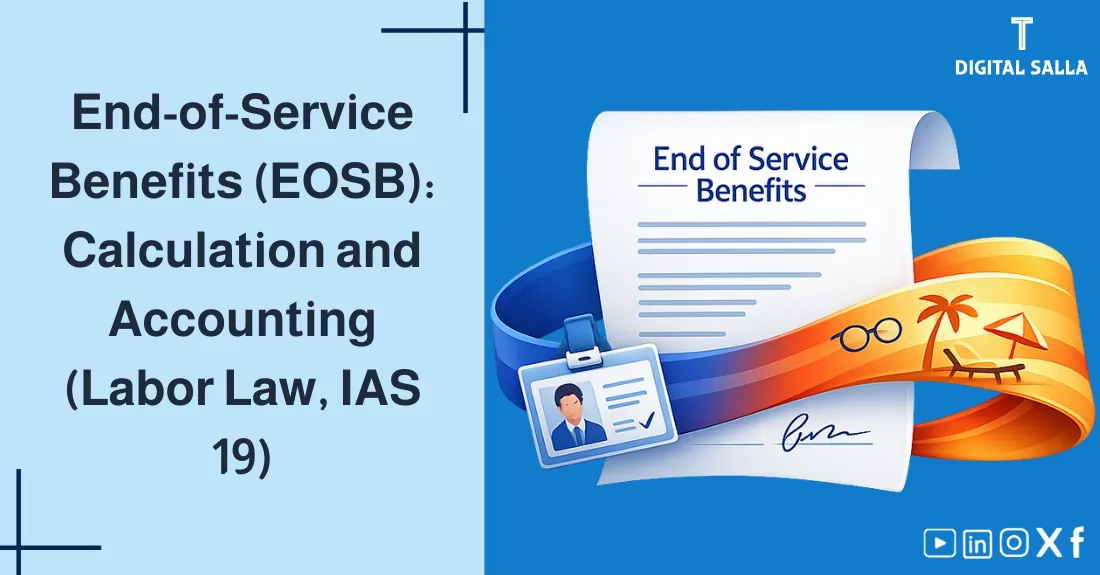
End of Service Benefit (EOSB): Calculation Method and Accounting Treatment (According to Labor System and IAS 19)
End of Service Benefit (EOSB) Calculation: The method of calculation according to the labor system, and how to form and account for the end-of-service provision according to IAS 19, with examples of entries and adjustments for employee entitlements—the digital basket.
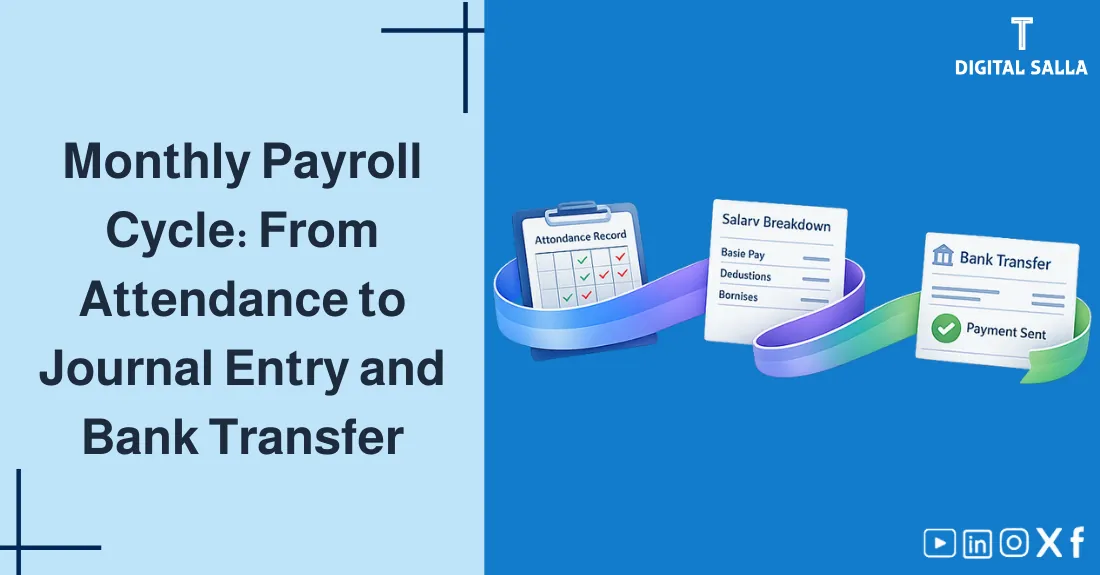
Monthly Payroll Cycle: Journey from Attendance Sheet to Entry and Bank Transfer
Step-by-step payroll processing: From attendance sheet and payroll preparation to payroll entry and bank transfer via WPS, with a checklist to ensure correct deductions and bank reconciliation—the digital basket.
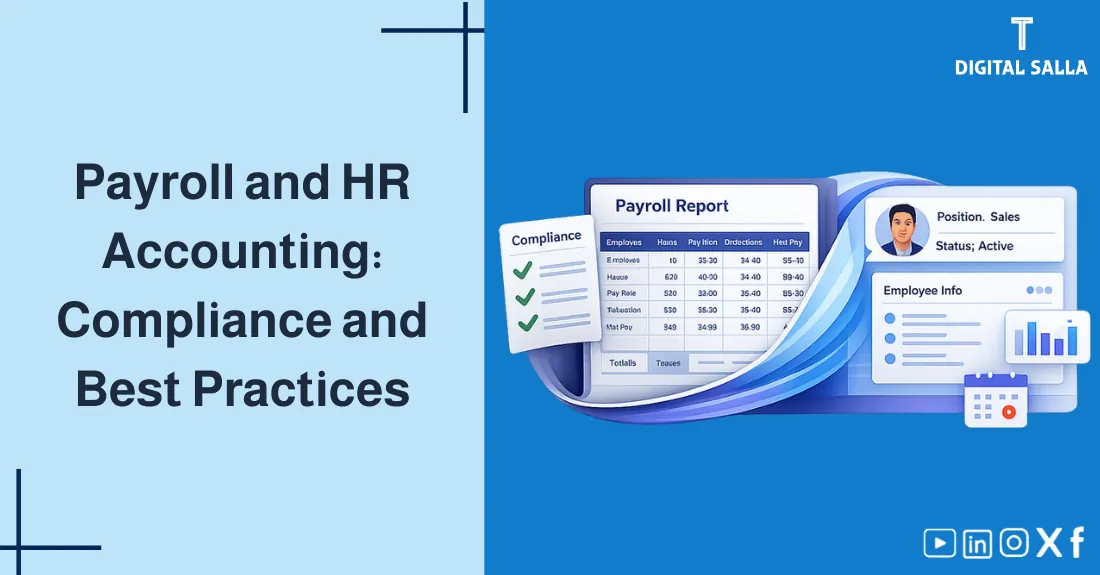
Payroll and HR Systems: Accounting and Compliance
Payroll Accounting: A guide to Payroll Accounting for payroll and HR systems, from payroll processing to employee benefits and labor costs and compliance, with control points to reduce errors and risks—the digital basket.
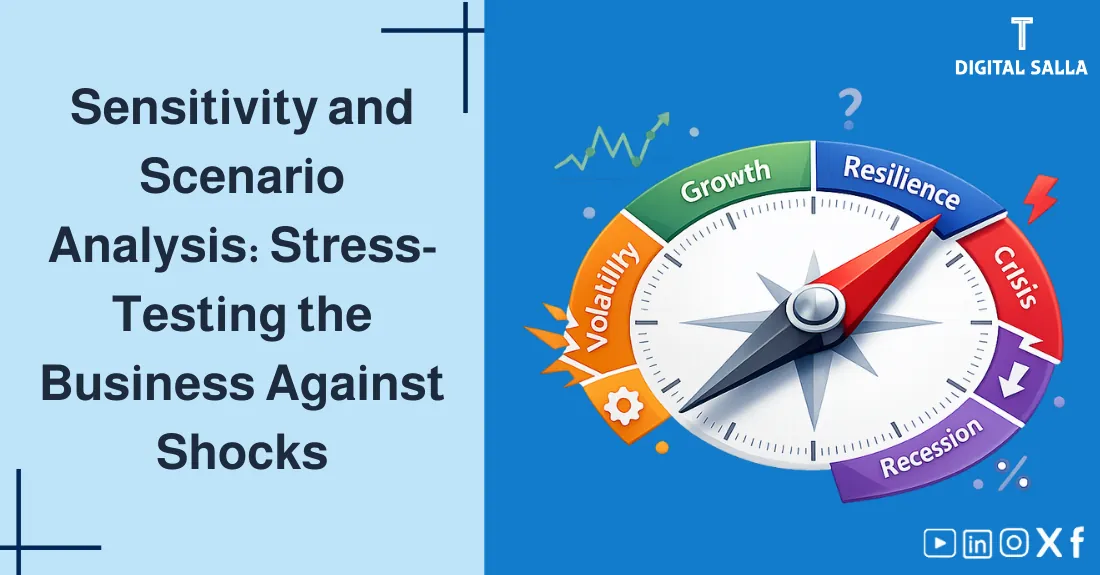
Sensitivity and Scenario Analysis: Stress Testing the Company’s Resilience
Sensitivity Analysis: How to build scenario analysis and apply stress testing to measure financial risks? Learn to identify critical variables and their impact on profitability and liquidity before making a decision—the digital basket.
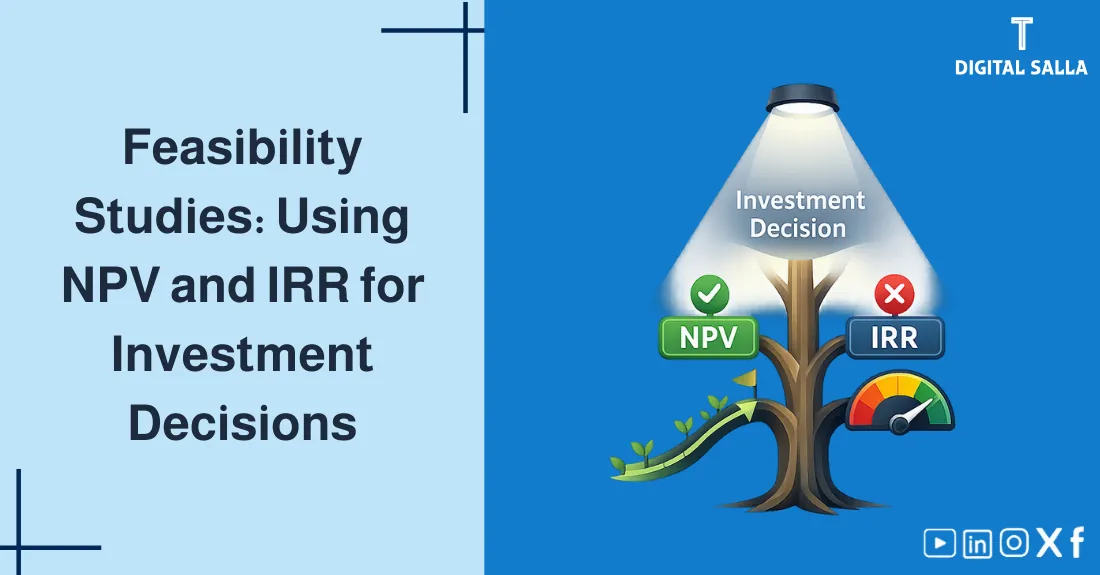
Feasibility Studies: Using NPV and IRR to make investment decisions
Financial Feasibility Study: How to use Net Present Value (NPV) and Internal Rate of Return (IRR) and the payback period to make investment decisions, with steps for risk assessment and assumptions to ensure realistic results—the digital basket.
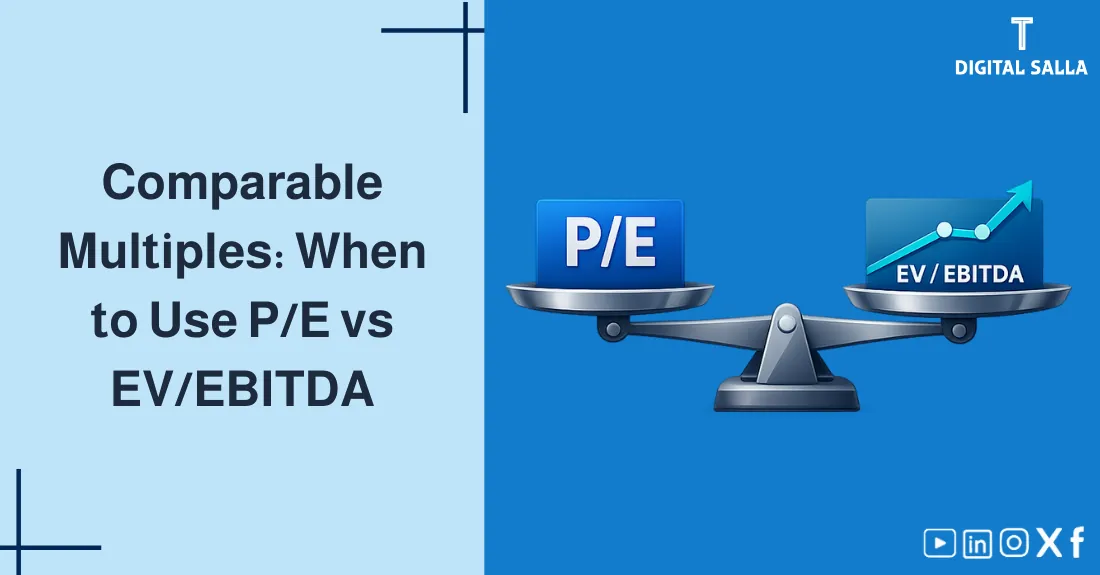
Valuation with Market Multiples (Comparable Multiples): When to use P/E and when EV/EBITDA?
Profit Multiples: When to use the P/E ratio and when EV/EBITDA? And how to read the sales multiple and apply Comparable Multiples to evaluate startups and mature companies without exaggerations—the digital basket.
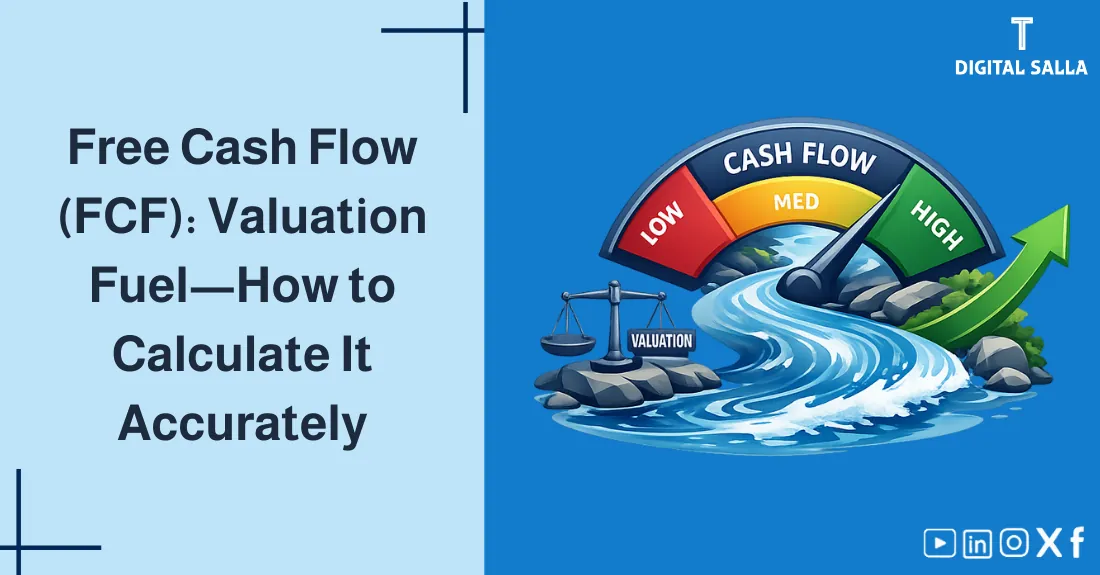
Free Cash Flow (FCF): The fuel for valuation, how to calculate it accurately?
Free Cash Flow (FCF): How to accurately calculate FCF? And why is it the fuel for valuation in Discounted Cash Flow (DCF). Explanation of formulas, components, and common errors that mislead value—the digital basket.