


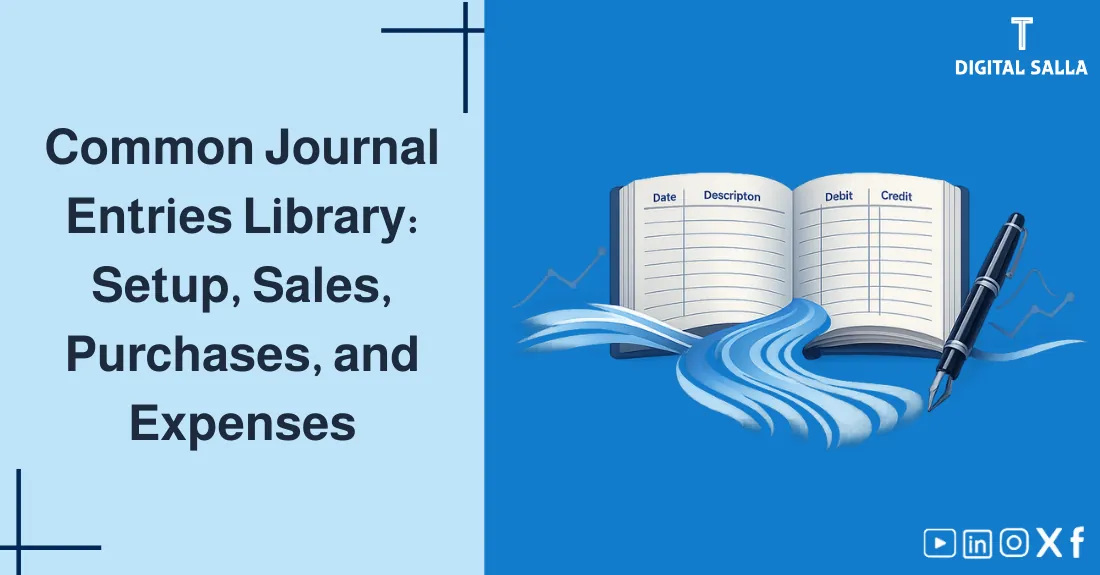
Common Entries Library: Establishment, sales, purchase, and expense entries
Common Journal Entries Library: Ready-made accounting entry templates including establishment entries, sales entries, purchase entries, and expenses to speed up your work and reduce errors—Digital Basket.
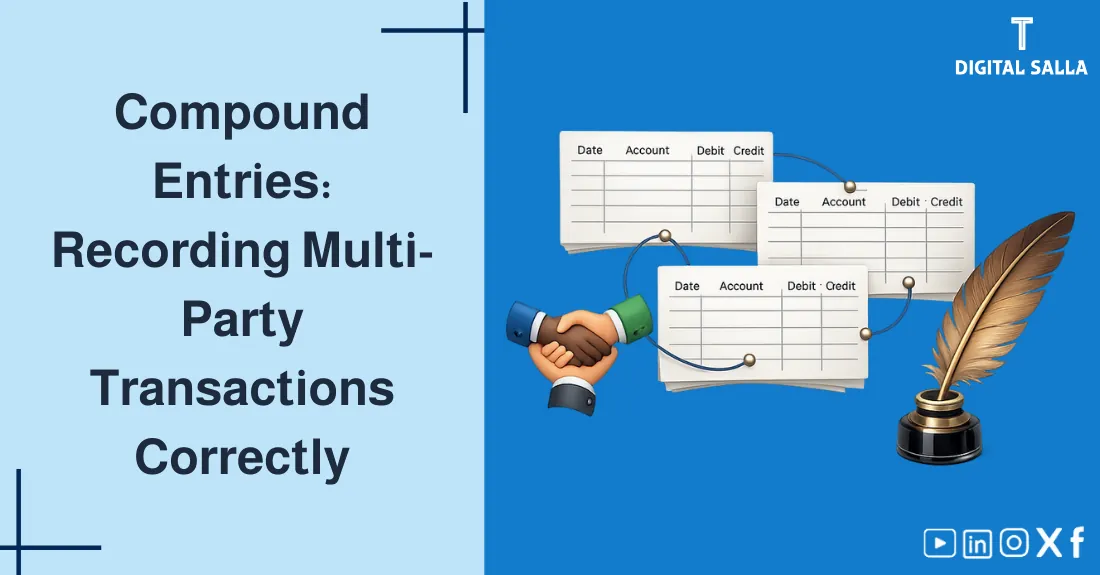
Compound Entries: How to record multi-party transactions?
Learn compound entries and how to record multi-party transactions in the format 'from mentioned to mentioned', with a comparison of simple and compound entries and examples like salary entries and adjustment entries—Digital Basket.
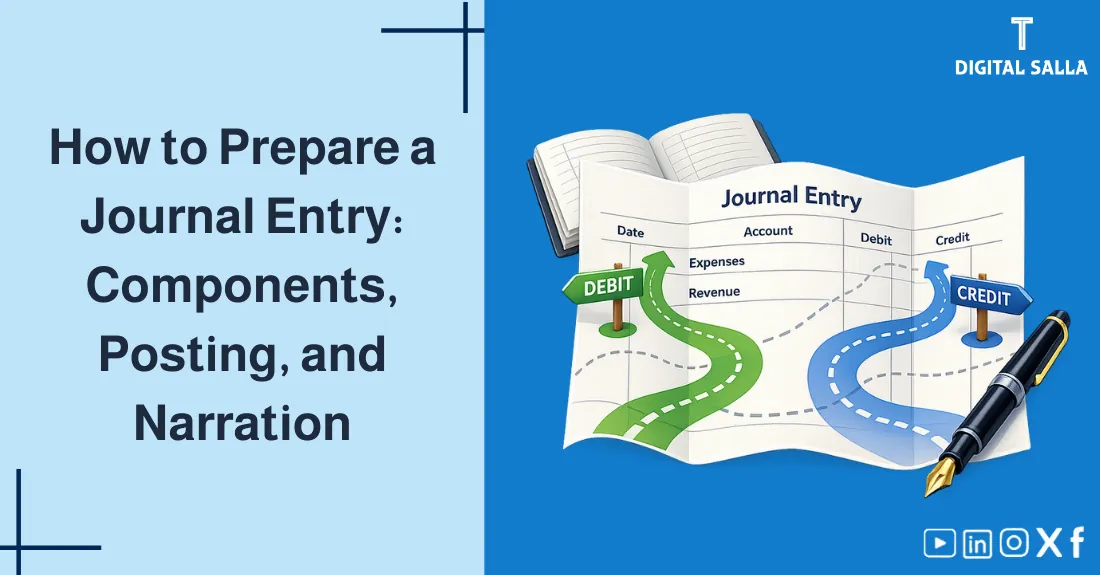
How to Prepare a Journal Entry: Components, Direction, and Narration
Preparing a journal entry step by step: Components of a Journal Entry, rules for writing and directing entries, and how to write a clear narration that supports examination and review—Digital Basket.
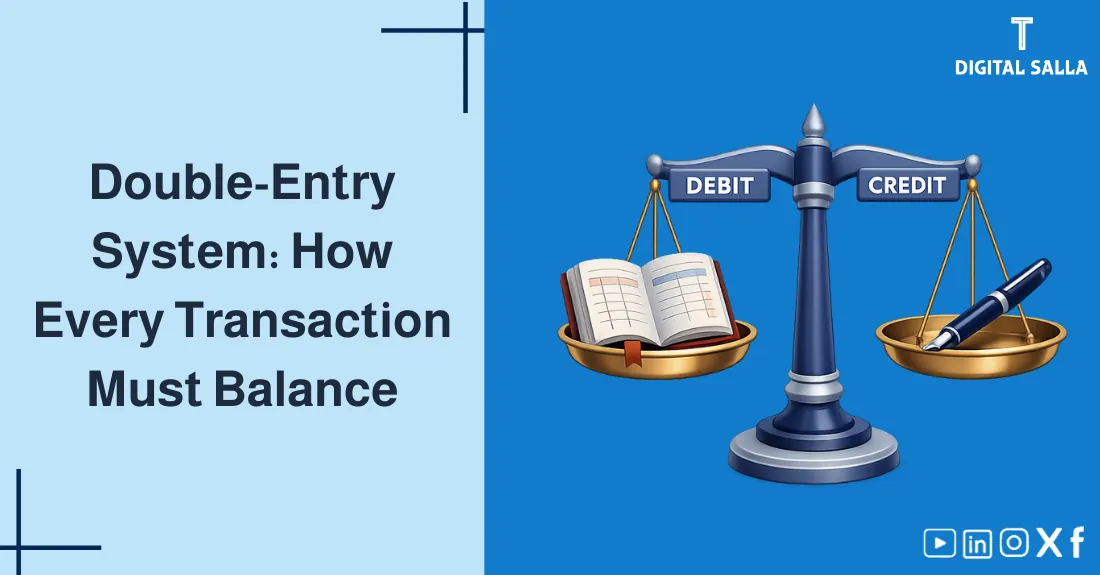
Double Entry System: How to weigh each financial transaction (Explanation for Accountants)
Double Entry System: Why is it important and how does it weigh each financial transaction? Learn about the history of double entry and the difference between single and double entry with examples illustrating the accounting logic—Digital Basket.
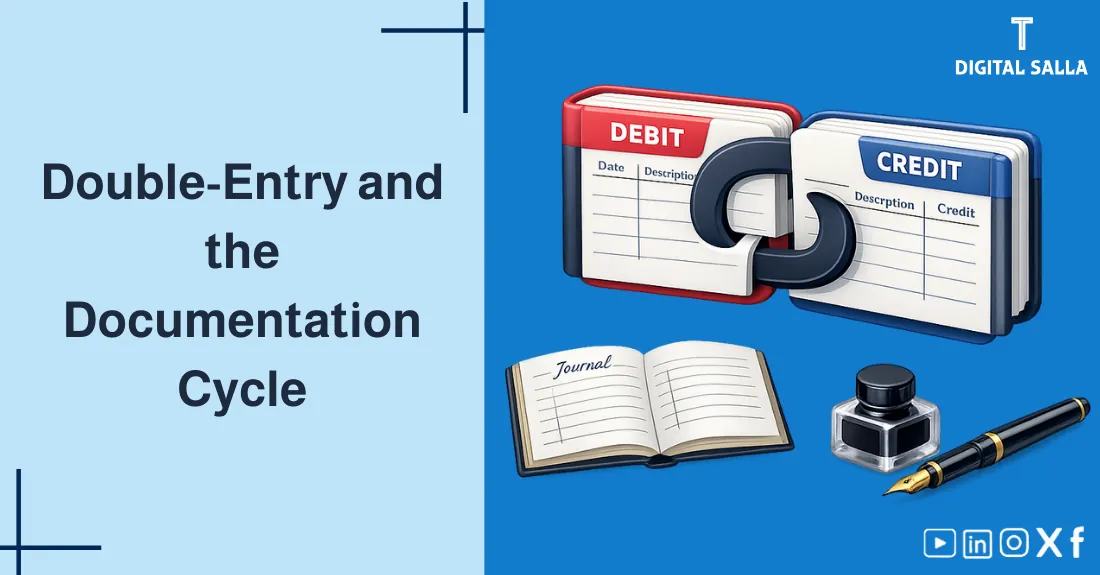
Double Entry and Documentation Cycle (Double Entry & Documentation)
Double entry explains the Double Entry System theory and how both sides of the entry work to ensure balance, with an overview of the documentation cycle and accounting mechanics from document to ledger—Digital Basket.
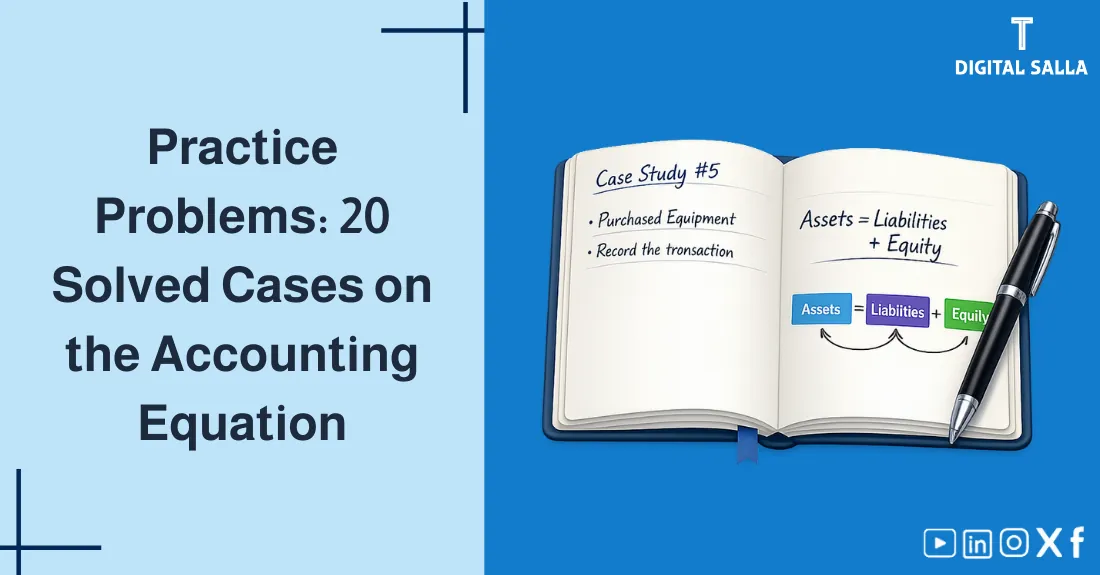
Solved practical exercises: 20 practical cases on the accounting equation
Exercises on the accounting equation: 20 solved accounting problems and practical applications and case studies to help you understand the impact of transactions on assets, liabilities, and equity—Accounting training on Digital Basket.
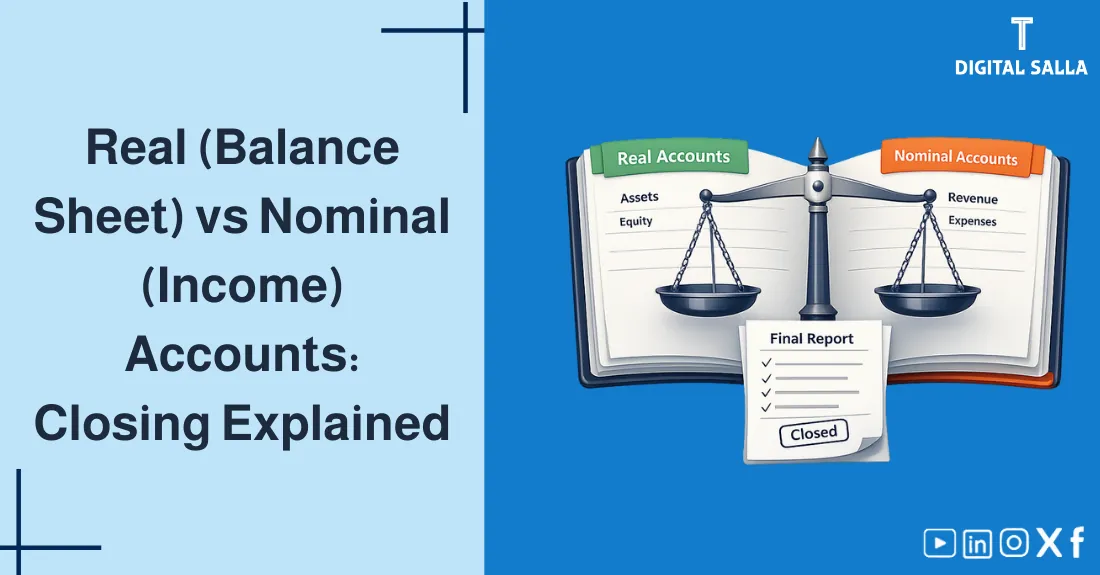
Real accounts (balance sheet) vs nominal accounts (income): differences and closure
Real and nominal accounts: the difference between balance sheet accounts and income statement accounts, and what temporary and permanent accounts mean and how balances are transferred and closed at the end of the period—Digital Basket.

Payment vs Expense: When is payment considered an asset (Prepaid) and when is it considered an expense?
The difference between payment and expense: When does payment become an asset as a prepaid expense and when is it recognized as an expense? Explanation of expense recognition timing with practical examples—Digital Basket.
Collection vs Revenue: Why is cash not always profit?
Learn the difference between collection and revenue and why cash is not always profit: revenue recognition according to the accrual principle and distinguishing between cash flow vs profit with examples—Digital Basket.
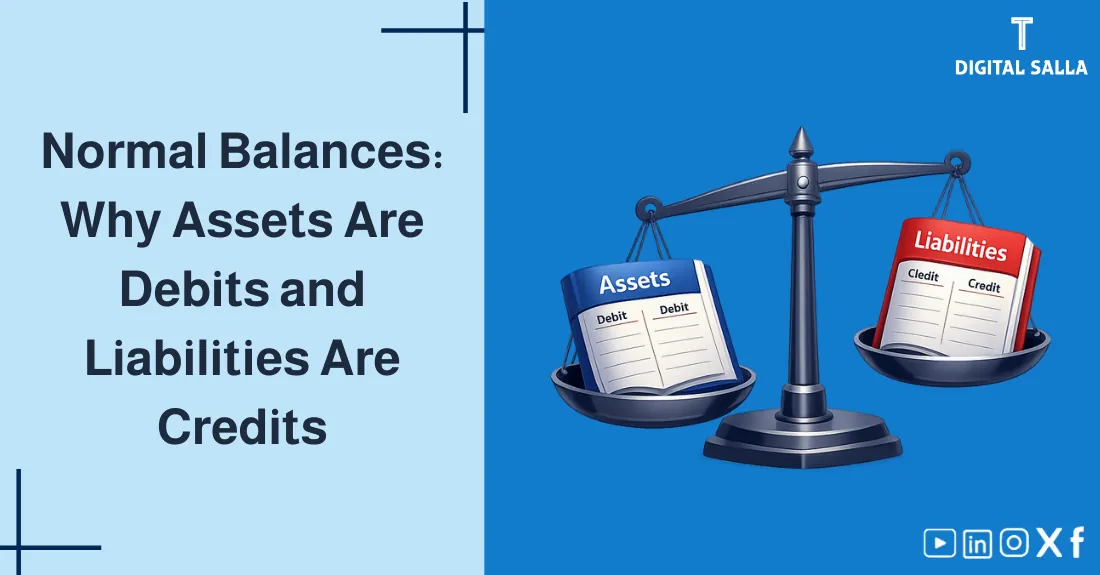
Nature of accounts (Normal Balance): Why are assets debited and liabilities credited?
Nature of accounts or normal balance: Why are assets debited and liabilities credited? Explanation of debited accounts and credited accounts and entry rules and their relation to the chart of accounts—Digital Basket.
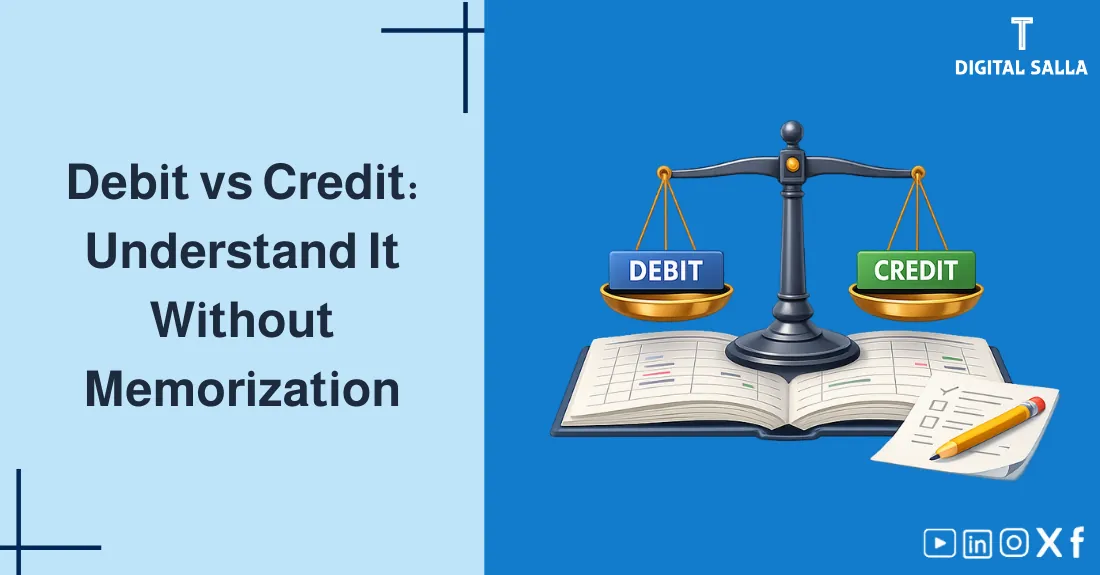
Debit vs Credit rule: How to understand it without memorization?
Understand the Debit and Credit rule without memorization: the difference between debit and credit with the logic of giving and taking, linking it to the nature of accounts and easy entry examples—Digital Basket.
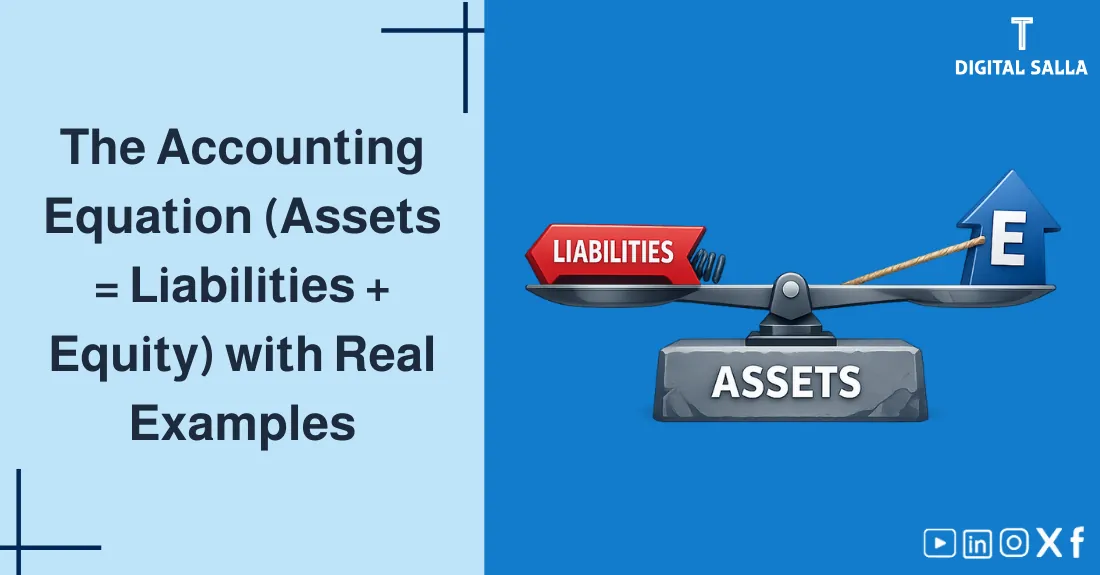
Explanation of the accounting equation (assets = liabilities + equity) with real-world examples
Explanation of the accounting equation with assets = liabilities + equity through real-world examples of the accounting equation, and how to maintain the balance of the equation and understand the impact of transactions instantly—Digital Basket.
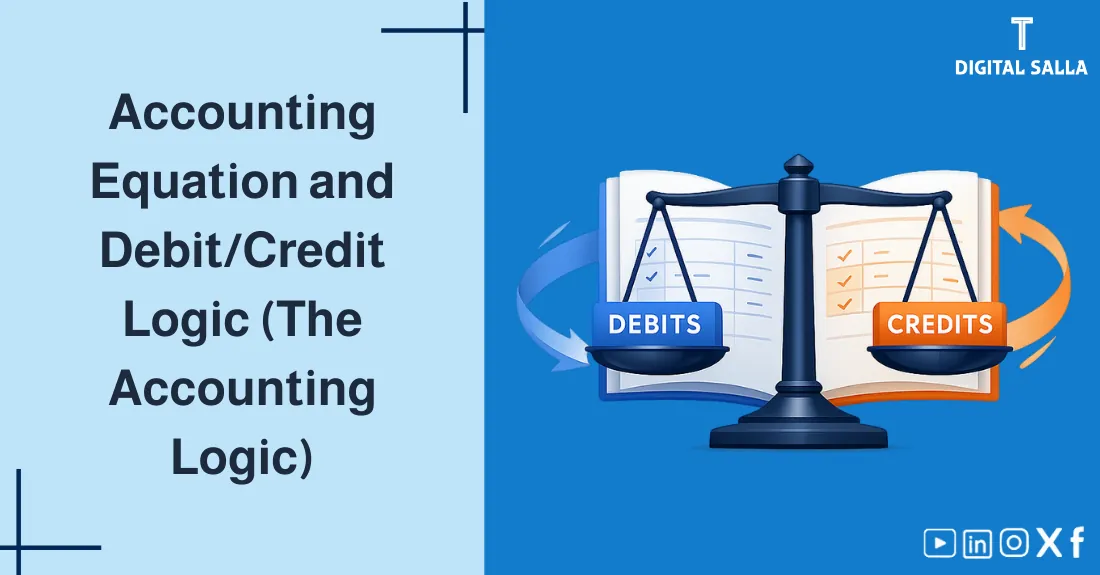
The Accounting Equation and the Logic of Debits and Credits
Learn the Accounting Equation and the Logic of Debits and Credits: The Balance Sheet Equation (Assets Equal Liabilities and Equity) with a Simplified Explanation Linking Transactions to Their Impact—The Digital Basket.
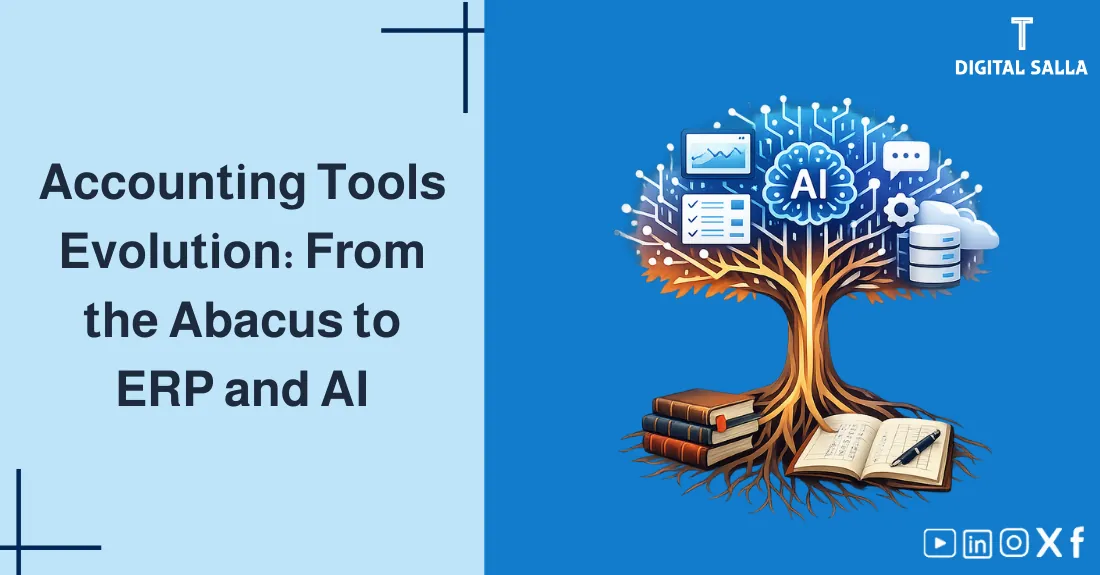
The Evolution of Accounting Tools: From the Abacus to ERP and Artificial Intelligence
The Evolution of Accounting Tools from the Chinese Abacus and Calculator to the History of Accounting Software and the Transition from Ledgers to Computers, then ERP Systems and Artificial Intelligence—The Digital Basket.

Global Accounting Pioneers (Founders of Big 4): Deloitte, Ernst, Young, and Arthur Andersen
Explore the Global Accounting Pioneers and Founders of the Big 4: Deloitte, Ernst & Young, PricewaterhouseCoopers, and Arthur Andersen, with an Overview of the History and Origins of Major Companies—The Digital Basket.