

Assessing the Impact of Mergers and Acquisitions on Financial Statements
Understand M&A Impact on Financial Statements, key requirements, and practical examples to improve your financial reporting—on the Digital Basket.
Considering IAS 20 Standard: Accounting for Government Grants and Disclosure of Government Assistance
Understand IAS 20 Government Grants, key requirements, and practical examples to improve your financial reporting—on the Digital Basket.
International Accounting: Standards and Principles for Dealing with Global Markets
Understand International Accounting, key requirements, and practical examples to improve your financial reporting—on the Digital Basket.
Challenges in Intangible Asset Valuation and Their Impact on Financial Statements
Understand Intangible Asset Valuation Challenges, key requirements, and practical examples to improve your financial reporting—on the Digital Basket.
Impact of Exchange Rate Changes on Financial Statements
Understand Exchange Rate Impact on Financial Statements, key requirements, and practical examples to improve your financial reporting—on the Digital Basket.
Impact of Regulatory Changes on Financial Statements
Understand Regulatory Changes Impact, key requirements, and practical examples to improve your financial reporting—on the Digital Basket.
Impacts of Various Factors on Financial Statements
Understand Factors Affecting Financial Statements, key requirements, and practical examples to improve your financial reporting—on the Digital Basket.
Difference Between IAS and IFRS International Financial Reporting Standards and International Accounting Standards
Understand IFRS vs IAS, key requirements, and practical examples to improve your financial reporting—on the Digital Basket.

Detailing IAS 16 Standard: Property, Plant and Equipment
Understand IAS 16 Property, Plant and Equipment, key requirements, and practical examples to improve your financial reporting—on the Digital Basket.
Analysis of IAS 19 Standard: Employee Benefits
Understand IAS 19 Employee Benefits, key requirements, and practical examples to improve your financial reporting—on the Digital Basket.
Presentation of IAS 17 Standard Leases
Understand IAS 17 Leases, key requirements, and practical examples to improve your financial reporting—on the Digital Basket.
Exploring IAS 21 International Accounting Standard: The Effects of Changes in Foreign Exchange Rates
Understand IAS 21 Foreign Exchange, key requirements, and practical examples to improve your financial reporting—on the Digital Basket.
Impact of Political Changes on Accounting Practices
Understand Political Changes and Accounting, key requirements, and practical examples to improve your financial reporting—on the Digital Basket.
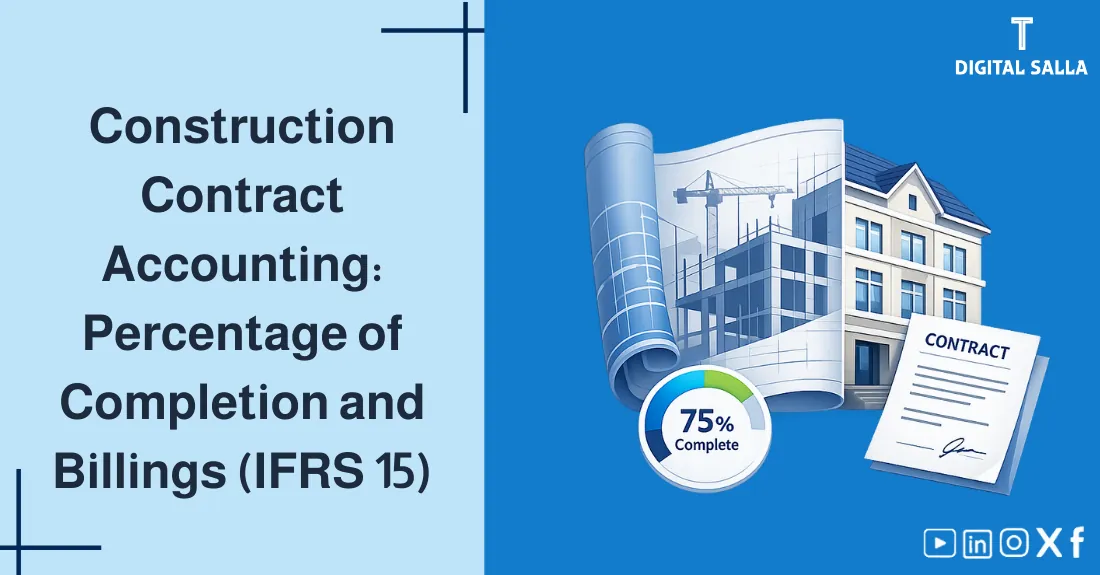
Construction Contract Accounting: Percentage of Completion (POC) and Extracts (IFRS 15 Standard)
Percentage of Completion (POC): How to recognize revenue in construction according to IFRS 15, and handle extracts and work-in-progress, with examples of entries and steps to calculate and update the percentage of completion regularly—Digital Basket.
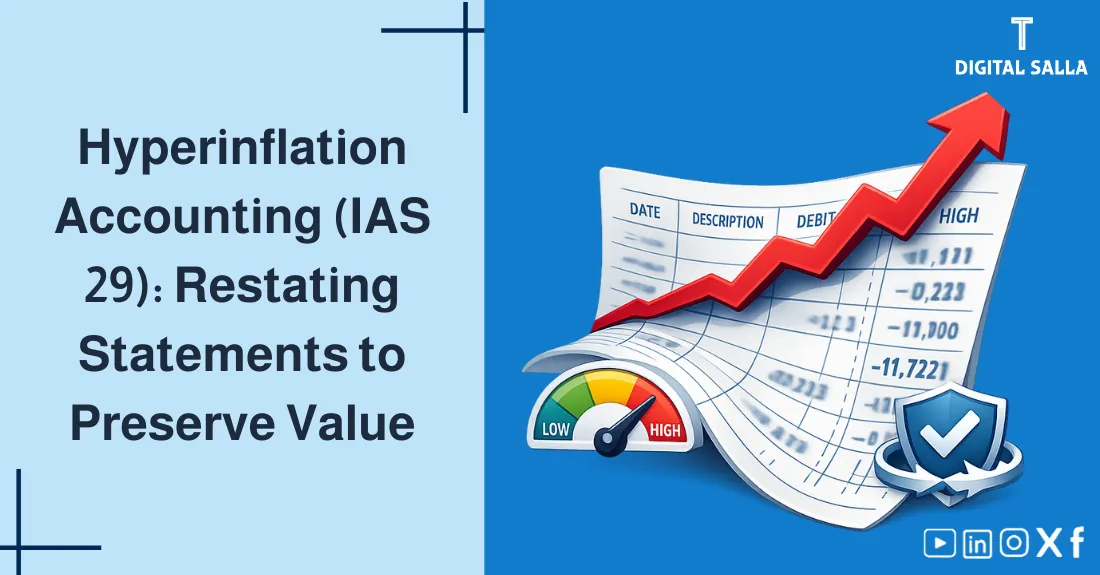
Accounting in Hyperinflationary Economies (IAS 29): How to adjust statements to maintain their value?
Hyperinflation Standard (IAS 29): How are financial statements adjusted in hyperinflationary economies to maintain their value? Explanation of remeasurement steps and calculation of purchasing power losses and their effects on results—Digital Basket.
Deferred Taxes (Deferred Tax – IAS 12): Why Do Accounting Profits Differ from Tax Profits?
Deferred Taxes (IAS 12): Why Do Accounting Profits Differ from Tax Profits? Explanation of Temporary Differences and How to Recognize Deferred Tax Assets and Liabilities with Simplified Examples—Digital Basket.
Reversing Entries: When to Use Them to Facilitate the New Month’s Work?
Reversing Entries: When to use them after adjusting entries? And how they help facilitate accounting work for the new month and avoid repetition, with common examples and beginning-of-year entries—Digital Basket.
Related Parties: How to Identify and Disclose Them According to IAS 24
Related Parties: How to Identify Related Parties and Related Party Transactions, and What Are the Disclosure Requirements According to IAS 24 to Avoid Conflicts of Interest and Improve Report Transparency for the Auditor and Investor—Digital Basket.
Year-End Closing: Closing Entries for Temporary Accounts and Transferring Results
Year-End Closing: Explanation of Closing Entries and how to zero out temporary accounts and transfer results to prepare final accounts and statements accurately, with clear practical steps—Digital Basket.
Interim Financial Reports (IAS 34): How Do Quarterly Statements Differ from Annual Ones?
Interim Financial Reports According to IAS 34: What Is the Difference Between Quarterly and Annual Statements? And What Are the Key Interim Disclosure Requirements and How to Summarize Information Without Compromising Transparency or Comparability—Digital Basket.
Accounting Policies and Error Correction (IAS 8)
Accounting Policies According to IAS 8: Consistency in Policies, When Disclosure of Policies is Required, and How to Distinguish Between a Policy Change and a Change in Estimates and Professionally Correct Errors—Digital Basket.
How to Write an Accounting Policies Guide for the Company? (With a Proposed Model)
Accounting Policies Guide: Steps to Prepare a Policies Guide and Link it to Financial Procedures and Corporate Governance, with a Proposed Model to Help You Standardize Financial Policies and Reduce Disputes During Review—Digital Basket.
Accounting Estimate vs Accounting Policy: Fundamental Difference and How to Address
Accounting Estimate vs Accounting Policy: What is the Fundamental Difference? And How to Address Changes in Accounting Estimates like Useful Life and Provisions Without Violating Standards or Misleading Results—Digital Basket.
Correcting Accounting Errors: Should You Adjust Retrospectively or in the Current Period?
Correcting Accounting Errors According to IAS 8: When Should Previous Years be Retrospectively Adjusted? And When is it Sufficient to Adjust in the Current Period? Explanation of Restating Financial Statements and Disclosure Steps to Avoid Risks—Digital Basket.
Materiality: When to Ignore the Error and When to Adjust It?
Materiality: How to Determine Materiality? And When Can an Insignificant Error be Ignored, and When Does it Become a Material Error Requiring Adjustment and Financial Disclosure to Protect Credibility—Digital Basket.
Preparation and Presentation of Financial Statements According to International Standards (IAS 1): The Complete Guide
Preparation of Financial Statements According to IAS 1: A Comprehensive Guide to the Structure of Financial Reports, from Final Accounts to Audited Financial Statements, with Presentation, Classification, and Disclosure Rules Expected by Auditors—Digital Basket.
Accrual Basis and Inventory Adjustments (The Heart of Financial Accounting)
Inventory adjustments are the heart of financial accounting: Learn about Adjusting Entries and how to prepare them before closing the period to correct revenues and expenses and link them to the accounting cycle—Digital Basket.
Balance Sheet: Structure, Liquidity Order, and the Difference Between Current and Non-Current
Balance Sheet: Explanation of the Balance Sheet and Its Structure and Liquidity Order, and How to Differentiate Between Current and Non-Current in Assets, Liabilities, and Equity for Proper Reading—Digital Basket.
Cash Basis vs Accrual Basis: Why do profitable companies collapse due to liquidity?
The difference between Cash Basis and Accrual Basis: Accrual Basis vs Cash Basis, the advantages and disadvantages of each basis, and why a profitable company might collapse due to liquidity, and when switching to accrual is necessary—Digital Basket.
Income Statement (P&L): Functional vs Nature Classification, and the Difference Between Operating Income and Net Profit
Income Statement (P&L): The Difference Between Functional and Nature Classification, and How to Distinguish Operating Income from Net Profit, with an Explanation of Revenues and Expenses for Clear Reading of the Profit and Loss Account—Digital Basket.