


Digital Transformation Roadmap – Roadmap
111.44 $
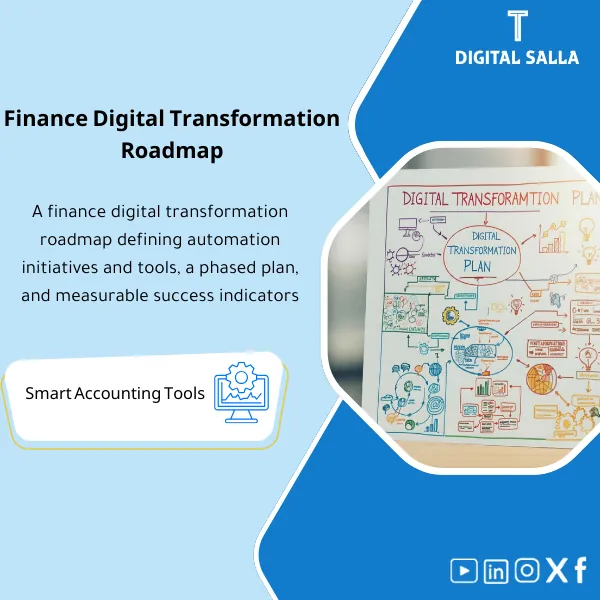
Practical Roadmap to Full Digital Transformation: A hands-on plan to increase finance efficiency through digital practices and data analytics, focusing on profitability improvement and operational performance.
Digital Transformation Plan
Practical transformation program for finance functions: As‑Is/To‑Be + Roadmap + Data & Controls + Go‑Live Runbook — with auditable outputs
Value Proposition: Digital transformation within finance management is not achieved merely by purchasing a system; it is realized when you possess a “Transformation Program File” that connects: current state (As‑Is) → target design (To‑Be) → system and data requirements → implementation and testing plan → post-launch operating guide. This practical plan for achieving full digital transformation provides you with operational and oversight outputs: When is it approved? Where is the Audit Trail? What are the data controls? What will be delivered at Go‑Live?
In 20 seconds: What will you receive?
- Program Charter: Clear scope + Governance + Decision-makers + Decision log.
- As‑Is Finance Map: Inventory of finance processes and reports and operational pain points (Month‑End/Approvals/Manual Excel).
- To‑Be Design: Targeted design with steps + Approval points + Controls + Evidence for each process.
- Requirements Pack: System/report/integration requirements + Traceability Matrix (Request ↔ Design ↔ Test).
- Data Workstream: Data quality rules + Migration/Cleaning plan + Master Data controls.
- Testing & Go‑Live: UAT Plan + Defect log + Cutover/Go‑Live checklist + Hypercare log.
- Closing Runbook: Month‑End operation post-transformation with auditable templates (JE/Recon/Closing Pack).
CTA related to outputs: You will receive Roadmap + Requirements + Data/Controls + UAT/Go‑Live Runbook as a ready-to-operate program package.
Suitable for
- Financial Controller / CFO: You want to manage the transformation program with clear guides and decisions instead of a “system project.”
- ERP / Automation Lead: You need a file of requirements, tests, and deliverables that holds every Workstream accountable.
- Companies relying on Excel and email approvals: You want to standardize operations with Audit Trail and SoD.
Not Suitable for
- Those whose primary goal is transitioning to International Accounting Standards (IFRS Conversion) — this is a different path with a separate conversion package and accounting treatments.
- Those seeking general information such as “Digital City/Smart City” as a tourist topic/general project — the product pertains to a financial transformation program within the company.
Without a Plan / With a Plan (Short Comparison)
| Item | Without a Structured Transformation Program | With the Digital Transformation Plan |
|---|---|---|
| Scope | “We are implementing a system” without defining processes/reports | Charter + As‑Is/To‑Be + Deliverables for each Workstream |
| Data | Delayed migration + Duplicate data | Data Quality rules + Cleaning plan + Master Data controls |
| Testing | Unrecorded UAT + Issues post-launch | UAT plan + Test evidence + Defect log + Go‑Live checklist |
| Controls | Unclear approvals and permissions | RACI + SoD checkpoints + Evidence index + Sign‑off |
Before Use: 5 Symptoms That “Transformation” is Just Tools
- Monthly closing relies on manual Excel + the same report is rebuilt every month.
- Purchase/Payment/Journal approvals occur via messages without a request number or Audit Trail.
- Master Data (Customers/Vendors/Items/COA/CC) contains duplicates and undocumented changes.
- Discrepancies between operational reports and statements due to unstable data sources and lack of Traceability.
- Whenever there is a change in employee, Vendor, or System, the process halts because there is no Runbook or clear deliverables.
Digital Transformation: Implementation Method (3 Steps Without Gaps)
Step 1: Diagnosis and Establishing the Baseline (As‑Is + Pain Points)
- Inventory of current systems + periodic reports + critical Excel files + current approval points.
- Mapping As‑Is processes (R2R/P2P/O2C) and identifying where Manual work occurs and where evidence is lost.
- Issuing Issues & Risks log + defining required outputs for each process.
Step 2: Target Design (To‑Be) + Controls + Solution Requirements
- To‑Be Design: Operating steps + Approval points + Mandatory logs (Registers/Logs).
- Establishing control measures: SoD checkpoints + Evidence requirements + Permissions/Roles.
- Issuing Requirements pack + Traceability matrix to ensure that every requirement will be tested and delivered.
Step 3: Execution and Installation (Data + UAT + Go‑Live + Runbook)
- Data Workstream: Cleaning + Quality rules + Migration + Master Data controls post-launch.
- Practical UAT: Test cases linked to requirements + Defect log + Evidence for tests.
- Go‑Live/Cutover: Checklist + Permissions + Hypercare monitoring + Closing Runbook post-transformation.
Plan Components (Clear Inventory)
-
Program Charter
- Practical Purpose: Establishing the scope of the transformation program and governance responsibilities and decision points.
- When Used: First deliverable in the program and before any purchase/implementation.
- Resulting Guide: Charter + Steering decisions log + Workstreams list.
-
As‑Is Process & Report Inventory
- Practical Purpose: Documenting the current state including critical Excel files and data sources to determine “what should be removed/automated.”
- When Used: Diagnosis phase and before To‑Be design.
- Resulting Guide: As‑Is maps + report list + pain points log.
-
To‑Be Design + Controls
- Practical Purpose: Transforming technology transformation into operations: steps + approvals + mandatory logs + testable controls.
- When Used: Before building/setup, and for team training post-launch.
- Resulting Guide: To‑Be maps + Control points + Evidence list + RACI.
-
Requirements Pack + Traceability Matrix
- Practical Purpose: Transforming “definition of transformation” within your company into testable requirements (reports, approvals, integrations, permissions).
- When Used: When selecting/configuring the system and when managing the scope.
- Resulting Guide: Requirements backlog + Traceability (Requirement → Design → Test → Sign‑off).
-
Roadmap & Delivery Plan
- Practical Purpose: Distributing execution across clear phases: Data/Processes/Reports/Tests/Launch with Dependencies.
- When Used: For program management and setting expectations for management and teams.
- Resulting Guide: Roadmap + Milestones register + Scope changes log.
-
Data Workstream Pack
- Practical Purpose: Addressing the root causes of transformation failure: data quality + duplicates + Master Data governance + migration plan.
- When Used: Before any data loading and after Go‑Live as ongoing operational controls.
- Resulting Guide: Data Quality rules + Migration plan + Cutover data checklist + Exception logs.
-
UAT & Go‑Live Pack
- Practical Purpose: Proving that the system “works for your cases” and not on a Demo: testing + results + defects + readiness for launch.
- When Used: Before Go‑Live and during Hypercare.
- Resulting Guide: UAT evidence + Defect log + Go‑Live readiness sign‑off + Hypercare log.
-
Finance Runbook
- Practical Purpose: Establishing monthly operations post-transformation: Month‑End steps + JE approvals + Reconciliations + Closing pack.
- When Used: First month after launch and then as a permanent reference for the team.
- Resulting Guide: Runbook + Owners + Templates + Evidence archive map.
What Should Be Included in the Deliverable?
- 01-Program Charter: Scope + Governance + Workstreams + Decision log.
- 02-As‑Is Pack: Current process maps + report list + pain points + risks.
- 03-To‑Be Pack: Target design + approval points + mandatory logs + controls and evidence.
- 04-RACI & SoD: Responsibilities + Conflicts of interest + Compensating controls as needed.
- 05-Requirements & Traceability: Requirements + Traceability matrix (Design/Test/Sign‑off).
- 06-Roadmap: Delivery plan in phases + Milestones + Scope change log.
- 07-Data Workstream: Quality rules + migration + cleaning + data exception reports.
- 08-UAT Pack: Test plan + cases + results + Defect log + test evidence.
- 09-Go‑Live/Cutover: Checklist + permissions + rollback plan (if any) + Hypercare log.
- 10-Runbook: Month‑End operation post-transformation + JE/Recon/Closing Pack templates + evidence archiving map.
- 11-Sign‑offs: Approval of key deliverables (To‑Be/Requirements/UAT/Go‑Live).
After Implementation (Two Points Only)
- Operational Outcome for the Team: Processes become “defined” and operated with logs: Request → Approval → Execution → Reporting, with a Runbook for closing instead of rebuilding operations every month.
- Oversight/Audit Outcome: You have Traceability: Requirement ↔ Design ↔ Test ↔ Sign‑off, and an Evidence index proving approvals, tests, and changes — suitable for internal and external audits.
FAQ — Questions Before Purchase
What is the definition of digital transformation? (Definition of Transformation)
In finance, operationally it is the transition of processes from undocumented manual steps to a Workflow with logs, approvals, and reports, with controlled Master Data and a Runbook for closing. The product transforms this definition into requirements, tests, and deliverables.
Is the plan associated with a company or entity named “Technology Transformation Company”?
No. Technology Transformation Company here is treated as a search term. The plan is general and designed for any company environment seeking a structured transformation program.
Is the plan an alternative to selecting an ERP system?
It is not an alternative. The plan produces Requirements, Roadmap, Data/Controls, and UAT. It can be used before/during ERP selection to refine requirements and prevent scope changes during implementation.
Does it cover “transitioning to International Accounting Standards”?
No, as an accounting conversion (IFRS conversion). Digital transformation focuses on operations, data, and controls. If your goal is IFRS, you need a specific Conversion pack for conversion entries, opening balances, and disclosures.
Is it suitable for small businesses?
Yes, if you have a volume of approvals/payments/reports that causes rework or delays in closing. The scope can be reduced: focusing on 1–2 critical processes + core data + Runbook.
Does it include SoD and permissions?
Yes, through RACI/SoD checkpoints: Who requests? Who approves? Who executes? And what compensating control is in place if full separation is not possible.
Does it include data migration and quality?
Yes, as a Workstream package: Data quality rules, exceptions, and a migration/cleaning plan, with evidence and exception closure.
Is it suitable for city/region-level initiatives like “Digital City”?
If it refers to an initiative within your organization to enhance operational and data maturity across multiple departments, the structure is suitable as it is a program with phases and deliverables. However, as general information about a “Digital City,” this is outside the product’s scope.
Ready to Transform “System Project” into a Digital Transformation Program with Guides and Deliverables?
Outputs: Charter + As‑Is/To‑Be + Requirements/Traceability + Data/UAT/Go‑Live + Runbook with Sign‑off.
| المسمّى الوظيفي | |
|---|---|
| Duration | |
| المستوى | |
| التحديثات | |
| القطاع | |
| الصيغة |
Related products

Reviews
Clear filtersThere are no reviews yet.