



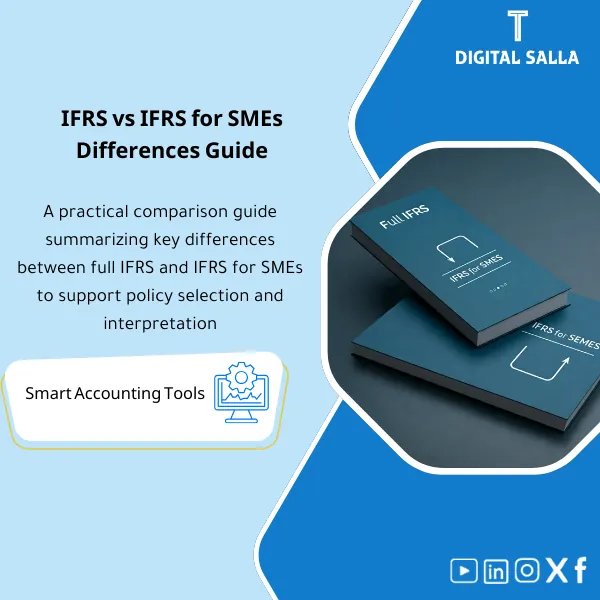
IFRS Comparison Guide – PDF File
159
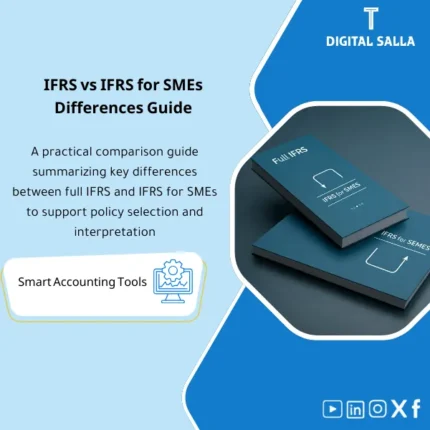
Main Differences Between IFRS & IFRS for SMEs Report (Excel) presents the key differences in an organized format, focusing on accounting treatment variances—supporting practical assessment of which framework best fits your business.
Still confused about whether to apply Full IFRS or IFRS for SMEs? You’re not alone.
This comprehensive PDF guide gives you a complete side-by-side comparison of both frameworks — including a Decision Checklist, Difference Matrix, Standards Map, Disclosure Checklist, Policy Memo Template, and Transition Notes — so you can make the right call with confidence.
🛡️ 7-Day Guarantee
📄 Professional PDF File
5 Signs You Desperately Need This Guide
1Framework Selection Paralysis: You’re unsure whether your entity qualifies for IFRS for SMEs or must adopt Full IFRS — and the wrong choice could trigger costly restatements down the road.
2Scattered, Unreliable Resources: You’ve been piecing together information from random articles and outdated summaries that don’t cover the latest standards or local regulatory requirements.
3Standard Mapping Nightmares: Full IFRS has numerous standards (IFRS 9, 15, 16, 17, 18…) while SMEs uses simplified Sections — figuring out which maps to which is eating up your billable hours.
4Disclosure Gaps in Reports: Some Full IFRS disclosures are optional or simplified under SMEs, and missing or over-disclosing can raise red flags with auditors and regulators.
5Transition Without a Roadmap: Whether you’re moving from SMEs to Full IFRS or vice versa, you have no structured plan — risking errors in opening balances, policy adjustments, and comparative figures.
What You Get
Your guide includes 6 powerful tools packed into one professional PDF file:
| Decision Checklist | A step-by-step checklist to evaluate your entity’s size, public accountability, and regulatory obligations — so you pick the right framework from day one. |
| Difference Matrix | A detailed comparison table covering recognition, measurement, and presentation differences between both frameworks — organized by topic for quick reference. |
| Standards Map | A clear mapping of every Full IFRS standard (including IFRS 9, 15, 16, 17, 18) to its corresponding IFRS for SMEs Section — so you never lose your place. |
| Disclosure Checklist | A side-by-side disclosure requirements checklist showing what’s required, simplified, or exempted under each framework — audit-ready from the start. |
| Policy Memo Template | A ready-for-review accounting policy memo template you can customize for your entity — saving hours of drafting from scratch. |
| Transition Notes | Practical guidance for transitioning between frameworks in either direction — covering opening balances, comparative periods, and first-time adoption adjustments. |
How to Use This Guide in 4 Simple Steps
Run the Decision Checklist
Start by answering the checklist questions about your entity’s size, public accountability, and regulatory environment to determine whether Full IFRS or IFRS for SMEs is the right fit.
Study the Key Differences
Use the Difference Matrix to pinpoint exactly where the two frameworks diverge — focus on the topics most relevant to your entity’s transactions and industry.
Map Standards and Review Disclosures
Cross-reference the Standards Map to locate corresponding sections, then use the Disclosure Checklist to ensure your financial statements include every required note — nothing more, nothing less.
Draft Policies and Plan Transition
Customize the Policy Memo Template for your entity’s accounting policies. If you’re switching frameworks, follow the Transition Notes for a smooth, error-free changeover.
Before vs. After Using This Guide
| Aspect | ❌ Without | ✅ With This Guide |
|---|---|---|
| Framework Selection | Guesswork and second-guessing with no clear criteria | Confident decision backed by a structured checklist |
| Understanding Differences | Hours spent digging through scattered, outdated sources | One matrix with every key difference at your fingertips |
| Disclosures | Risk of over-disclosing or missing required notes | Complete checklist ensures audit-ready financial statements |
| Framework Transition | No roadmap — errors in opening balances and comparatives | Step-by-step transition notes with clear adjustments |
You’re an accountant, auditor, CFO, or finance professional who needs to choose between Full IFRS and IFRS for SMEs, prepare compliant financial statements, or manage a framework transition — and you want a single, reliable reference instead of hours of research.
You already have deep expertise in both frameworks and don’t need a comparison reference, or your entity exclusively follows a local GAAP with no plans to adopt any version of IFRS.
Does this guide cover the latest IFRS standards?
Yes. The guide covers the most recent standards including IFRS 9, 15, 16, 17, 18, and their corresponding sections under IFRS for SMEs, with up-to-date mapping and comparison.
Is this guide aligned with local regulations (e.g., SOCPA)?
The guide is built on the international IFRS framework. While it references regulatory contexts, you should always verify specific local requirements with your national standard-setter.
Can I edit or customize the templates?
The Policy Memo Template, Disclosure Checklist, and Transition Notes are designed to be practical and adaptable — you can use them as-is or tailor them to your entity’s specific needs.
What if my entity is transitioning from SMEs to Full IFRS (or vice versa)?
The Transition Notes section covers both directions — moving from IFRS for SMEs to Full IFRS and the reverse — including guidance on opening balances, comparative adjustments, and first-time adoption steps.
Ready to stop guessing and start deciding with confidence?
Get the clarity you need to choose the right IFRS framework, prepare compliant statements, and handle transitions like a pro — all in one guide.
| الفئات | Professional References & Guides |
|---|---|
| Job Title | Accountant |
| Level | Intermediate |
| Format |
Related products
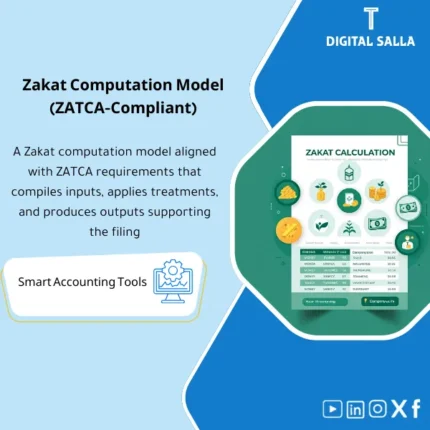
Zakat Computation Model – Excel File
Practical Zakat Calculation Template is a comprehensive Excel program to calculate Zakat accurately in accordance with the Executive Regulations of the Zakat Collection System in the Kingdom of Saudi Arabia. Includes simplified explanations of calculation rules—easy to use even for mid-level accountants.
Reviews
Clear filtersThere are no reviews yet.